100-Amp Subpanel for a Garage, Shop or ADU: Wire Size, Grounding and Cost
By Power Professor · 10 min read
Short answer: a 100 amp subpanel feeder at the usual 75°C terminal rating needs #3 copper or #1 aluminum conductors, plus a separate insulated neutral and an equipment ground. The popular 2-2-2-4 aluminum cable is rated 90 amps, not 100, for a subpanel, so it goes on a 90 amp breaker. #4 copper is fine for a 100 amp whole-house service under the dwelling rule, but not for a 100 amp subpanel feeder.
A 100 amp subpanel can be fed from a 200 amp main, and even from a 100 amp main. The breaker sizes do not have to add up to less than the service. What has to fit is the load calculation for the whole house including whatever the subpanel will power.
The rest of this guide covers conductor and conduit sizes, grounding and ground rods for detached buildings, the most common subpanel mistakes inspectors catch, and what a subpanel costs in the Portland-Vancouver area. Section numbers refer to the 2023 NEC, which Washington uses and Oregon used until October 1, 2026; the 2026 edition Oregon adopts on October 1, 2026 keeps the same ampacity values for these sizes.
What size wire for a 100 amp subpanel
Feeder conductors are sized from NEC Table 310.16. For residential work the 75°C column is the one that matters, because breaker and panel terminals are rated 75°C. Here are the values for the sizes that come up with 100 amp subpanels.
Ampacity at 75°C, NEC Table 310.16 (THHN/THWN-2, XHHW-2 and similar)
Conductor size
Copper
Aluminum
#4 AWG
85 A
65 A
#3 AWG
100 A
75 A
#2 AWG
115 A
90 A
#1 AWG
130 A
100 A
1/0 AWG
150 A
120 A
2/0 AWG
175 A
135 A
So for a true 100 amp subpanel feeder: #3 copper or #1 aluminum for the hot conductors, the neutral usually the same size, and an equipment grounding conductor sized from Table 250.122 (#8 copper or #6 aluminum for a 100 amp breaker). Long runs can need a bigger size to keep voltage drop reasonable, which we cover below.
Can you use 2-2-2-4 aluminum for a 100 amp subpanel?
Not on a 100 amp breaker. 2-2-2-4 aluminum (sold as SER, MHF or URD) has #2 aluminum hots, and #2 aluminum is rated 90 amps at 75°C. The "next size up" rule in 240.4(B) lets you round up to the next standard breaker only when the ampacity does not match a standard breaker size. 90 amps is itself a standard size, so there is nothing to round up to. The feeder gets a 90 amp breaker.
The confusion comes from NEC 310.12, the dwelling service rule. It lets conductors that carry the entire load of a single-family home be sized at 83% of the service rating, and its table shows #2 aluminum for a 100 amp service. That rule applies to the service or the main feeder of the whole dwelling. It does not apply to a subpanel that serves only part of the house, a garage or a shop. A feeder that carries the entire load of a separate dwelling unit, such as a whole ADU, can arguably use it; that one is the inspector's call.
In practice a 90 amp subpanel feeder is plenty for most garages and shops. If you need the full 100 amps, step up to #1 aluminum or #3 copper.
What size conduit for a 100 amp feeder
Conduit size comes from NEC Chapter 9: with more than two conductors, the wires may fill at most 40% of the conduit's inside area. Here is how the common 100 amp combinations work out in EMT and Schedule 40 PVC.
Conduit fill for common 100 amp feeders (40% limit, NEC Chapter 9 Tables 4 and 5)
Conductors
3/4 inch
1 inch
1-1/4 inch
3 × #4 Cu THHN + #8 Cu (100 A main feeder to a house panel)
Too full
OK in EMT (33%) and PVC 40 (34%)
OK
3 × #3 Cu THHN + #8 Cu ground (100 A subpanel)
Too full
OK in EMT (38%) and PVC 40 (39%)
OK
3 × #2 Al XHHW + #6 Al ground (90 A subpanel)
Too full
Too full
OK in EMT (27%) and PVC 40 (28%)
Schedule 80 PVC has a smaller inside diameter, so a combination that just fits 1 inch Schedule 40 can fail in 1 inch Schedule 80. Most of our underground feeders to detached buildings go in 1-1/4 inch or larger PVC anyway: it pulls far more easily and leaves room to upsize later.
For buried runs, NEC Table 300.5 sets the minimum cover: generally 24 inches for direct-burial cable, 18 inches for PVC conduit, and 6 inches for rigid metal conduit, with different rules under driveways and for some residential circuits.
Grounding: four wires, a separate neutral, and no bond at the subpanel
The most common subpanel defect we find is a neutral bonded to ground in the subpanel. In a subpanel, the neutral bar and the ground bar must be separate, the bonding screw or strap that comes with the panel is left out, and the feeder has four conductors: two hots, an insulated neutral and an equipment ground. The neutral and ground are bonded only at the service. Bonding them again downstream puts normal neutral current on ground wires and metal parts.
A detached garage, shop or ADU also needs its own grounding electrode system at that building (NEC 250.32), connected to the equipment ground of the feeder, still with no neutral-to-ground bond. And it needs a disconnecting means at the building, which is often the subpanel's own main breaker.
Attached garage or basement subpanel: four-wire feeder, neutral isolated, no ground rods needed at the subpanel.
Detached building: four-wire feeder, neutral isolated, ground rods or other electrodes at the building, and a disconnect at the building.
A single circuit to a detached shed (including one multiwire circuit): the building can skip its own ground rods; two or more circuits need them. Ask before you trench.
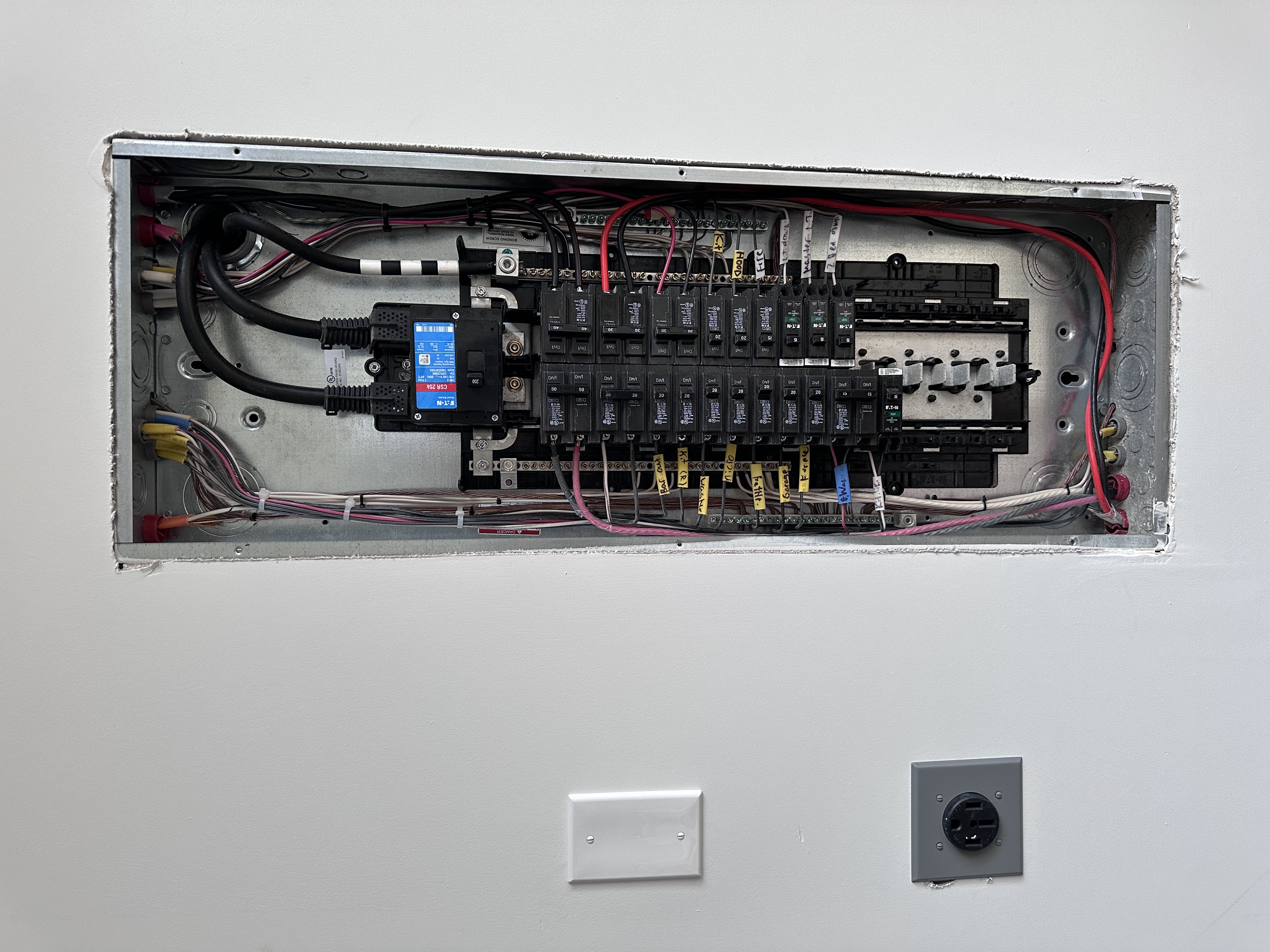
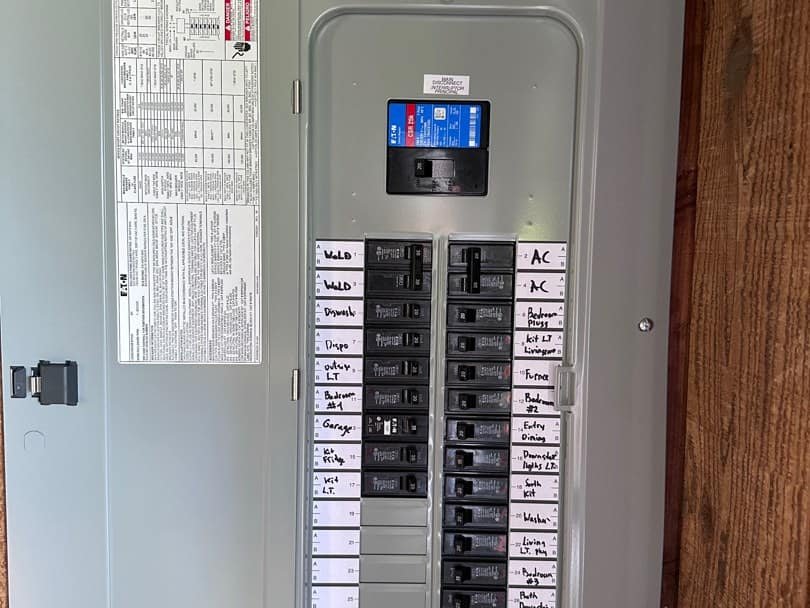
The panel in a Portland ADU we wired. In a subpanel, the neutral bar stays isolated from the enclosure.
Do you need two ground rods?
Usually, yes. A single ground rod has to be supplemented by a second electrode unless it is tested at 25 ohms or less to earth (NEC 250.53(A)(2)). Testing takes a meter most homeowners do not have, so the normal practice is simply to drive two rods.
The rods have to be at least 6 feet apart and have at least 8 feet in contact with soil. The grounding electrode conductor to rods does not need to be larger than #6 copper, whatever the size of the service. The same rules apply to a 100 amp service, a 200 amp service, and a detached building's subpanel.
Oregon's amendments to the 2026 code, as published in draft, add a narrow exception for single-phase temporary services of 200 amps or less, which can use a single rod. It does not change the rule for permanent services or detached buildings.
Feeding subpanels from 100 and 200 amp mains
A 100 amp subpanel off a 200 amp main is routine. Two 100 amp subpanels off a 200 amp main is also allowed. There is no rule that feeder breakers have to add up to less than the service rating. Each breaker protects its own conductors, the main still protects the service, and the load calculation for the whole house, including everything the subpanels feed, has to fit 200 amps.
A 100 amp subpanel off a 100 amp main is allowed too. The feeder breaker can equal the main breaker; it protects the feeder conductors and the subpanel, and the main protects the service. It is common when the main panel is full and the subpanel exists to add spaces rather than capacity. It does not add any capacity: the house is still limited to 100 amps.
That is the key point about subpanels. A subpanel solves a space problem or a distance problem. It does not solve a capacity problem. If the load calculation does not fit the service, the answer is load management or a service upgrade, which we cover in is 100 amp service enough.
Long runs: voltage drop
Detached shops and ADUs are often 75 to 200 feet from the main panel. Over that distance, wire that is legal for the ampacity can still lose enough voltage to make motors and heat pumps work harder. The NEC recommends keeping feeder and branch circuit drop to about 5% combined, in an informational note rather than a requirement.
As an example, #1 aluminum carrying 80 amps over a 100 foot run loses roughly 4 volts, under 2% at 240 volts. At 200 feet it is about double that, and stepping up to 1/0 or 2/0 aluminum is often the cheaper fix than copper. We size long feeders for the actual load and distance, not just the breaker.
What a subpanel costs in Portland and Vancouver
Our published planning range for a subpanel for a garage, shop or ADU is $800 to $1,800 and up. The main things that move it are feeder length, whether the feeder has to be trenched or run through finished walls, the subpanel's size, and whether the building needs its own ground rods and disconnect.
Trenching a long run and any service upgrade needed to make room for the new load are priced separately. For comparison, a 100 to 200 amp service upgrade typically ran $2,500 to $3,500 on our invoices from August 2024 to August 2026. The permit covers the feeder and the new panel; in Portland a feeder of 200 amps or less falls under the same $212 service-and-feeder fee plus the 12% state surcharge. See our permit guide.
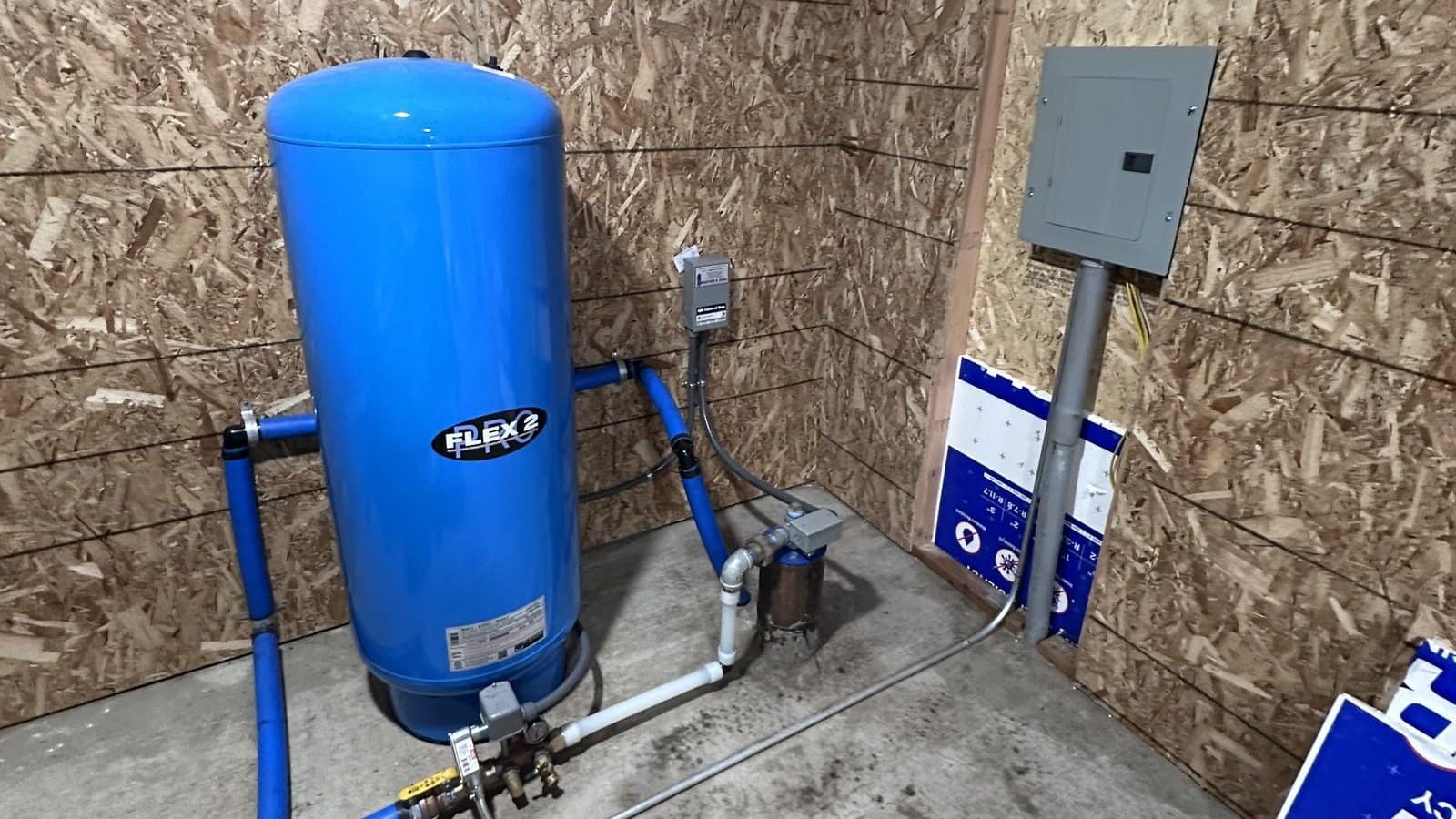
A subpanel we installed in a detached well house in Gresham, fed underground as part of a standby generator project.
The subpanel mistakes inspectors catch most
Neutral and ground bonded in the subpanel, or a three-wire feeder with no separate ground.
2-2-2-4 aluminum on a 100 amp breaker for a subpanel.
No ground rods or no disconnect at a detached building.
Aluminum terminations without the right torque, or on lugs not rated for aluminum.
Feeder cable run where it is not allowed, such as SE cable buried without conduit.
Panel mounted without working clearance: 30 inches wide, 36 inches deep in front, 6.5 feet of headroom.
A subpanel added to fix a capacity problem that is really a service problem.
At the usual 75°C terminal rating, #3 copper or #1 aluminum for the hots, a neutral usually the same size, and an equipment ground of #8 copper or #6 aluminum. Long runs may need larger conductors for voltage drop.
02Can I use 2-2-2-4 aluminum wire for a 100 amp subpanel?
Not on a 100 amp breaker. #2 aluminum is rated 90 amps at 75°C, and because 90 amps is a standard breaker size, the next-size-up rule does not apply. Use a 90 amp breaker, or #1 aluminum or #3 copper for a full 100 amps. The 310.12 dwelling rule that allows #2 aluminum at 100 amps covers only a feeder carrying the entire load of a dwelling unit, such as the whole-house service; a feeder to a whole ADU is the inspector's call.
03Can I add a 100 amp subpanel to a 200 amp main panel?
Yes, and you can add two. Breaker ratings do not have to add up to less than the service. The whole-house load calculation, including what the subpanels feed, has to fit 200 amps.
04Can you feed a 100 amp subpanel from a 100 amp main panel?
Yes. The feeder breaker can equal the main. It adds spaces, not capacity: the house is still limited to what a 100 amp service can carry.
05Is #3 wire good for 100 amps?
#3 copper, yes: it is rated 100 amps at 75°C. #3 aluminum, no: it is rated 75 amps.
06Can I use #4 copper for 100 amp service?
For a single-family home's whole-house service or main feeder, yes, under NEC 310.12. For a 100 amp subpanel feeder, no: #4 copper is rated 85 amps, which means a 90 amp breaker.
07Do I need two ground rods for 100 amp service?
Normally yes. A single rod must be supplemented unless it tests at 25 ohms or less, so electricians usually install two, at least 6 feet apart. The size of the service does not change this.
08What size conduit is needed for a 100 amp service?
Three #4 copper THHN, the usual 100 amp service conductors, fit comfortably in 1 inch EMT or Schedule 40 PVC; even with a #8 ground added they are at about 33% fill. #2 aluminum XHHW with a ground needs 1-1/4 inch. We usually go one size up on underground runs for easier pulling.
Electrical panel upgrades and replacements for Portland and Vancouver, WA homes — 100A to 200A service upgrades, Federal Pacific and Zinsco swaps, permit and inspection included, priced in writing before we start.
Full-service residential electrical work for Portland and Vancouver homeowners — panel upgrades, rewiring, lighting, and everyday repairs done safely and to code.
A 100 amp service is still legal, still sellable and still enough for plenty of gas-heated homes. It stops being enough when a heat pump, EV charger or electric range arrives. Here is how to tell which side of that line your house is on, with a worked load calculation.
Every panel or service upgrade in Oregon needs an electrical permit and an inspection before the utility will reconnect. In Portland the permit fee is $212 for a service up to 200 amps, plus the 12% state surcharge. Here is who issues it, how to apply, and what happens on inspection day.
Oregon lets owners wire their own home without a license, but not without a permit, and not on a house that is for sale or rent. Portland adds its own conditions. Here is what the law allows on both sides of the Columbia, what is permit-free, and where DIY stops making sense.
Get a subpanel sized for the load and the distance.
Tell us what the building will run and how far it is from the main panel. You get a written price with the feeder, grounding, permit and inspection included.