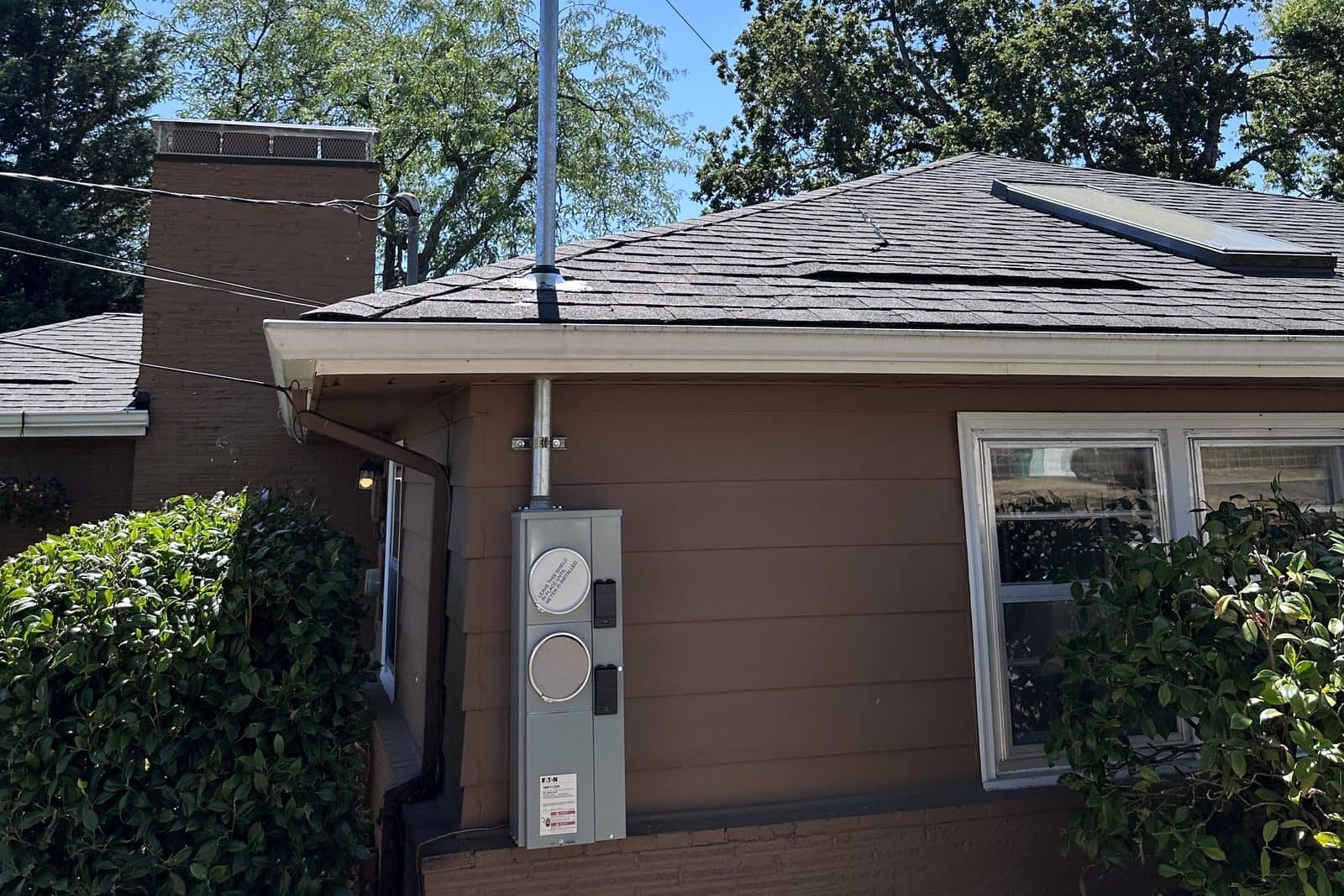
Residential Electrical Services
Full-service residential electrical work for Portland and Vancouver homeowners — panel upgrades, rewiring, lighting, and everyday repairs done safely and to code.
View service
Permits & Code · September 30, 2026

Short answer: in Oregon, you do not need an electrical license to do electrical work on a home you own, as long as the property is not intended for sale, exchange, lease or rent. You do still need a permit and an inspection for anything beyond basic maintenance. In the City of Portland you also have to live in the home, be the recorded owner (not an LLC), and the exemption does not cover rentals or ADUs.
Washington's rule is similar but with a different trigger: an owner can do electrical work on their own residence, but not on a new building intended for rent, sale or lease, and not on property they offer for sale within 12 months of obtaining it. The permit still comes from L&I or the city, and it has to be bought by the person doing the work.
Below we go through what the statutes actually say, what work is completely permit-free, what the homeowner permit process looks like in Portland and Vancouver, the penalties for getting it wrong, and the jobs where we would steer even a handy owner toward a licensed electrician. We are electricians, not lawyers; where the rules are ambiguous we say so and point you to the agency that decides.
Oregon's owner exemption lives in ORS 479.540(1). In plain terms, a person does not need an electrical license to make an electrical installation on residential or farm property that the person, or a member of their immediate family, owns, if the property is not intended for sale, exchange, lease or rent. The work still has to meet the electrical code.
Two details matter more than people expect. The state statute has no waiting period: the test is intent, so doing the work in the months before you list the house is exactly what the rule is meant to exclude. Portland goes further: under City Code 26.04.030, if the property is offered for sale or rent within six months of the work's final approval, the city presumes it was intended for sale or rent, and penalties of up to $500 can apply. And the exemption narrows sharply on rental property: on a residential building that is rented out, the owner exemption covers maintenance of existing installations, not new installations or substantial alterations.
A separate subsection, ORS 479.540(15), says an owner does not need a permit for work on, alterations to or replacement of parts of electrical installations as necessary for maintenance of existing installations on their own residential property. The same subsection states that it does not create an exemption for new electrical installations or substantial alterations. That is the line between "repair what is there" and "add something new".
Portland Permitting & Development sets out who can pull a homeowner electrical permit, and its conditions are tighter than the bare statute.
When you apply as the owner, Portland's Electrical Permit Application has you sign a declaration that the installation is on property you own that is not intended for sale, lease, rent or exchange. We did not find a competency test on the current city pages; the requirement is the signed declaration plus passing the inspections.
Other Oregon jurisdictions write the same idea into their own forms. Washington County's application, for example, asks the owner to confirm the installation is on residential or farm property owned by them or their immediate family and not intended for sale, exchange or rent. Clackamas County offers a basic homeowner electrical permit for work on your own residence.
The permit-free list is short, and it is set in rule, OAR 918-309-0000. No electrical permit is required to do the following.
| Job | Permit needed? | Notes |
|---|---|---|
| Replace a bulb or a fuse | No | Listed in OAR 918-309-0000 |
| Swap an existing dishwasher, disposal or 30A-or-less water heater | No | Same appliance type, existing circuit |
| Replace a worn outlet or switch like-for-like | Gray area | Arguably maintenance; confirm with your permit office |
| Add an outlet or light fixture | Yes | New installation |
| Add a circuit (EV charger, heat pump, hot tub) | Yes | New circuit and usually a load calculation |
| Change a fuse box to breakers or replace a panel | Yes | Service inspection; utility involved |
| Add a subpanel | Yes | Feeder and panel inspection |
On top of that, the owner maintenance provision in ORS 479.540(15) covers repair and replacement of parts of existing installations on your own home. Portland's own plain-language list says no permit is needed to fix appliance cords, replace a fuse, or replace an existing appliance such as a disposal or dishwasher, and says adding a light fixture, adding an outlet, or changing a fuse box to breakers do need one.
Where it gets gray is like-for-like device swaps: changing a worn receptacle or switch for the same kind on the same circuit. Many people treat that as maintenance under 479.540(15), but we did not find a rule that names it explicitly. If you are unsure whether your job counts, call the permit office before you start rather than after.
Legally, in Portland, a qualifying owner-occupant is not barred from a service change on their own home. The permit form has the same service line whether a homeowner or a contractor is applying, and we found no city rule that excludes homeowners from it. PGE's service requirements define its customer as the electrical contractor, developer or homeowner, and they require written notice before existing equipment is modified and the inspector's approval sticker before reconnection.
In practice it is the job we would most discourage. The service entrance conductors ahead of the main breaker are energized from the utility with no overcurrent protection of their own, the meter has to be pulled and sealed in coordination with the utility, and the house stays dark until the inspection passes, because the early-reconnect rule in OAR 918-311-0070 is limited to licensed supervising electricians. A mistake here does not just trip a breaker.
If you want to do some of the work yourself to save money, the more sensible split is usually to have a licensed contractor do the service and panel, and do the branch-circuit work you are comfortable with under your own homeowner permit, where your jurisdiction allows it.
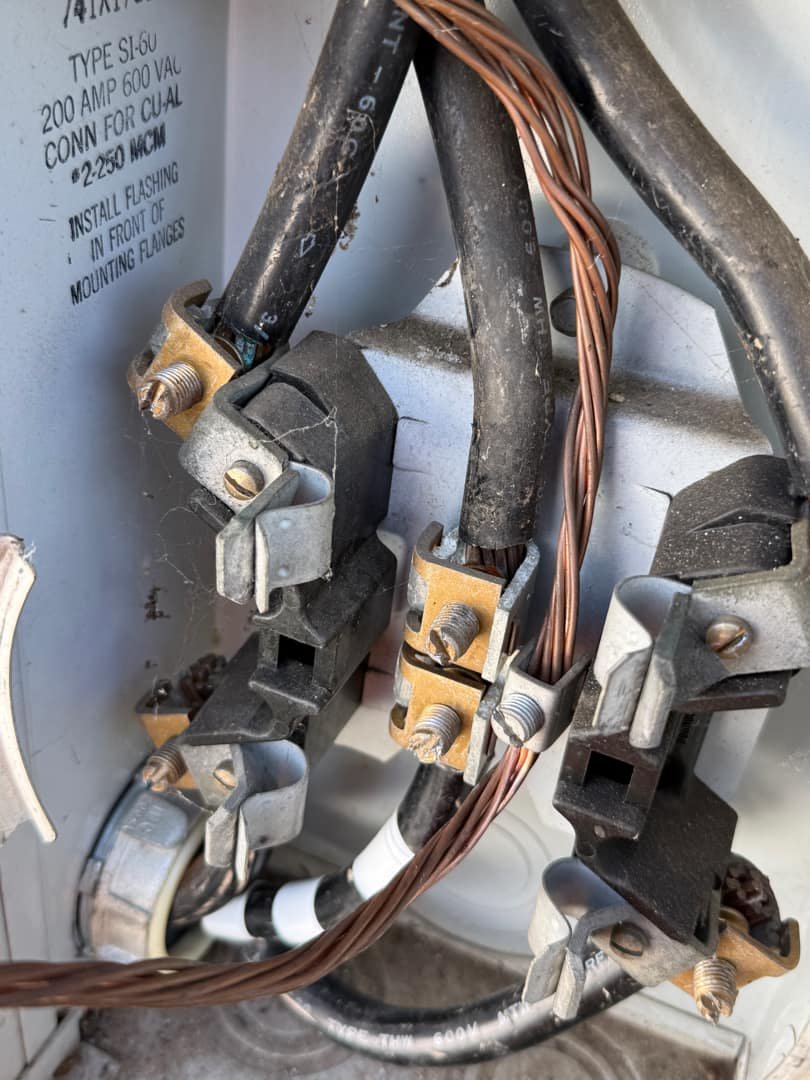
Oregon's exemption turns on whether the property is intended for sale, lease or rent. Work done while you were planning to list is outside the exemption, and any electrical work, permitted or not, can surface in a buyer's inspection.
Permitted homeowner work is fine at a sale: there is a permit, it was inspected, and it shows up as finaled in the jurisdiction's records. Unpermitted work is what causes problems, and fixing it after the fact usually means opening walls so an inspector can see it. If you have done electrical work on the house, pull the permit history for the address before you list.
In Oregon, the Electrical and Elevator Board can impose civil penalties for violations of the electrical licensing and permit statutes. Under ORS 455.895 the maximum is $5,000 per offense, or up to $1,000 per day for a continuing offense. Under OAR 918-001-0036 the maximum is reserved for a pattern of violations.
The bigger practical risks are not the fine. Insurers can ask for permit records after a fire, the utility can refuse to reconnect a service that has not been inspected, and a buyer's lender or inspector can hold up a sale. For a landlord, the exposure is larger: unlicensed new work on a rental is not covered by the owner exemption at all.
Washington's owner exemption is in RCW 19.28.261. You do not need a license or a certified electrician to do electrical work at your residence, farm or place of business, or on other property you own, unless the work is on a new building intended for rent, sale or lease, or the property is offered for sale within 12 months after you obtained it.
A permit is still required. L&I says an electrical permit must be bought by the person, company or organization doing the work, and the inspection has to be requested before anything is covered, no later than three business days after finishing, or one business day after any part is energized, whichever comes first. As an owner you sign L&I's property owner affidavit (form F500-094-000), which includes a statement that you will not offer the property for sale within 12 months of obtaining it and that you, or your regular employees, will do the work. L&I can fine up to $2,000 for starting work without a permit.
Inside Vancouver city limits, the City of Vancouver issues electrical permits instead of L&I, through its online permit center. Check with the city on its owner-permit process before you start.
| Oregon | Washington | |
|---|---|---|
| Statute | ORS 479.540 | RCW 19.28.261 |
| License needed for your own home? | No, if not intended for sale, exchange, lease or rent | No, unless new building for rent, sale or lease, or offered for sale within 12 months of obtaining it |
| Permit still required? | Yes, except maintenance and the short exempt list | Yes, bought by the person doing the work |
| Rentals | Maintenance only | Not for new rental buildings |
| Local extra conditions | Portland: owner-occupied, recorded owner, no LLC, no ADUs | Vancouver runs its own permit program |
| Maximum penalty | $5,000 per offense; $1,000 per day continuing | Up to $2,000 for work without a permit |
Plenty of owners do tidy, safe work on their own homes, and the permit and inspection process exists partly to support them. These are the jobs where we see owner work go well, and the ones where it tends not to.
If you are halfway through a project and want a licensed contractor to take over the parts that need one, we do that regularly and can work under a permit alongside yours where the jurisdiction allows. Our free home electrical safety check is a good starting point if you have inherited DIY work and want to know what you have.
Answers
Related services
Full-service residential electrical work for Portland and Vancouver homeowners — panel upgrades, rewiring, lighting, and everyday repairs done safely and to code.
View serviceA no-charge visual check of your home's electrical system — panel, grounding, outlets, GFCI and AFCI protection, smoke alarms and visible wiring. Roughly 45 minutes, written findings, no obligation.
View serviceElectrical panel upgrades and replacements for Portland and Vancouver, WA homes — 100A to 200A service upgrades, Federal Pacific and Zinsco swaps, permit and inspection included, priced in writing before we start.
View serviceKeep reading
A 100 amp service is still legal, still sellable and still enough for plenty of gas-heated homes. It stops being enough when a heat pump, EV charger or electric range arrives. Here is how to tell which side of that line your house is on, with a worked load calculation.
Read articleA subpanel adds circuits where you need them without touching the service. The mistakes happen in the details: wire that is really rated 90 amps, neutrals bonded to ground, and detached buildings with no ground rods. Here is how it is done properly.
Read articleEvery panel or service upgrade in Oregon needs an electrical permit and an inspection before the utility will reconnect. In Portland the permit fee is $212 for a service up to 200 amps, plus the 12% state surcharge. Here is who issues it, how to apply, and what happens on inspection day.
Read articleNot sure where the line is?
Send a few photos and a short description. We'll say which parts need a licensed electrician and a permit, and give you a written price for just those parts.