Is 100-Amp Service Enough? Code, Home Sales and When to Upgrade to 200 Amps
By Power Professor · 11 min read
Short answer: yes, 100 amp service is up to code for a single-family home. The National Electrical Code's minimum for a one-family dwelling is a 100 amp service disconnect, and nothing in Oregon or Washington requires an existing home to upgrade. You can sell a house with 100 amp service, and FHA has no minimum amperage.
Whether 100 amps is enough is a different question, and the answer depends on what runs on electricity. A gas-heated home with a gas range and water heater often lives comfortably on 100 amps. Add a heat pump with electric backup heat, a Level 2 EV charger, or an electric range and dryer, and a load calculation will often land over 100 amps.
This guide covers what the code actually requires, how common 100 amp service is, what a 2,000 square foot house really needs (with the math shown), whether an upgrade adds value, and the cheaper alternatives to upgrading when you are only just over the line.
Is a 100 amp panel up to code?
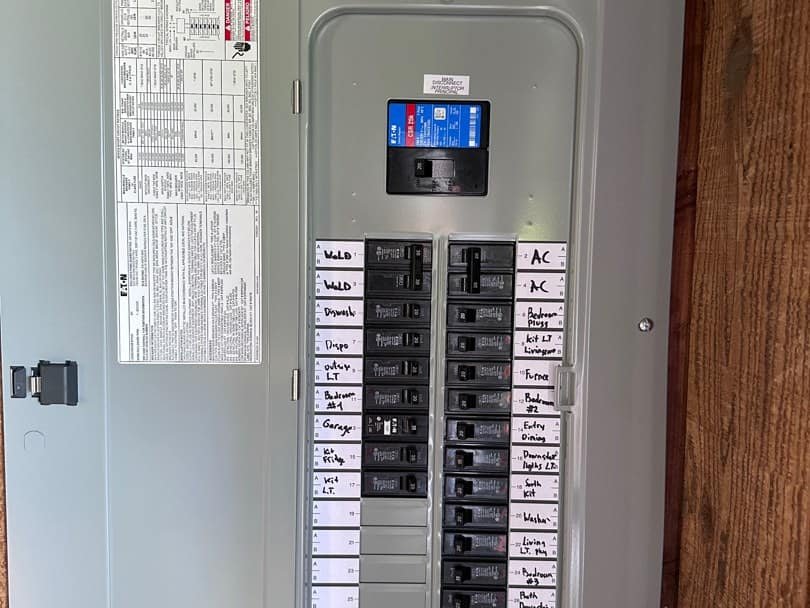
Yes. NEC 230.79(C) sets the minimum rating of the service disconnect for a one-family dwelling at 100 amps, three-wire. That number did not change in the 2023 NEC, which Washington uses, or in the 2026 NEC, which becomes Oregon's electrical code on October 1, 2026.
Electrical codes are not retroactive for existing, unaltered installations. A 100 amp service that was legally installed and is in good condition does not have to be upgraded because the code has moved on. What triggers a change is new work: when you add a large load, the electrician has to show with a load calculation that the service can carry it.
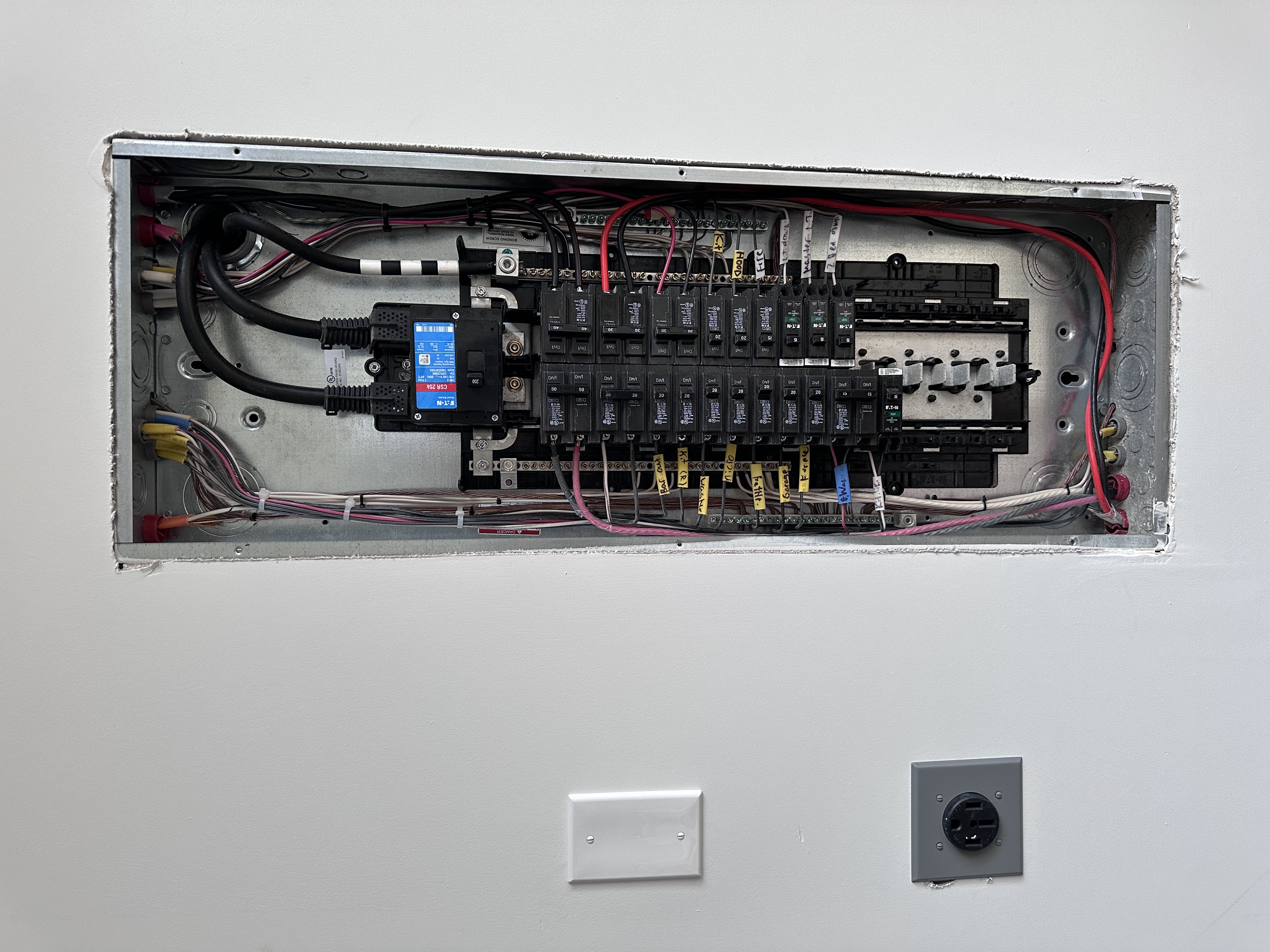
Where 100 amp homes do get flagged is on condition, not size: a Federal Pacific Stab-Lok or Zinsco panel, a fuse box, double-tapped breakers, scorched bus bars, or a service drop and mast that are pulling away from the house. Those are worth fixing whatever the amperage. Our knob-and-tube and aluminum wiring guide covers the older-house problems that usually come with them.
Do most homes have 100 or 200 amp service?
There is no official count. The Census Bureau does not ask about electrical service size. The best recent data is a 2025 peer-reviewed survey of 348 US single-family homes, verified with photos of each panel, published in *Energy Policy*. It found 31% had 100 amps or less, 9% had between 101 and 199 amps, and 60% had 200 amps or more.
Newer homes are much more likely to have 200 amp service. In the Portland metro, the older inner-city housing stock means a much larger share of 100 amp and even 60 amp services than the national survey suggests: more than a quarter of Portland's housing was built before 1940.
US single-family homes by service size (Gul and Meier, Energy Policy, 2025; 348 homes)
Service size
Share of homes
100 amps or less
31%
101 to 199 amps
9%
200 amps or more
60%
How many amps does a 2,000 square foot house use?
Square footage alone does not decide it. What matters is which big appliances are electric. Electricians size a service with a load calculation from the NEC, which counts lighting by floor area, adds kitchen and laundry circuits and every fixed appliance, then applies demand factors because not everything runs at once.
Here is the optional method electricians use to size a whole service (NEC 220.82, 2023 edition), worked for a typical 2,000 square foot Portland-area house with a gas furnace and central air. For an existing house adding one load, 220.83 or 220.87 is usually the method used, so treat this as an illustration, not a design for your house.
Worked load calculation: 2,000 sq ft house, gas heat, central AC (NEC 2023, 220.82)
Load
Volt-amperes
General lighting, 2,000 sq ft at 3 VA/sq ft
6,000
Two small-appliance kitchen circuits and one laundry circuit
4,500
Electric range
12,000
Electric dryer
5,000
Electric water heater
4,500
Dishwasher and disposal
2,000
General load total
34,000
First 10,000 VA at 100%, remaining 24,000 at 40%
19,600
Plus central air conditioning at 100%
5,000
Calculated load, and amps at 240 volts
24,600 VA = about 103 A
So a 2,000 square foot house with an electric range, dryer and water heater plus central air sits right at the edge of a 100 amp service. Add a Level 2 EV charger, which the 2023 NEC counts at 7,200 VA or its nameplate, whichever is larger: taken at the same 40% demand factor as the other general loads, the total rises to about 115 amps. Many inspectors count the charger at 100%, and the 2026 NEC requires that, which puts the same house near 133 amps. Replace the gas furnace with a heat pump (say a 4 kW compressor with 10 kW of electric backup heat, counted at 100% and 65% under 220.82) and it goes to roughly 125 amps before any charger, and 137 to 155 amps with one. That is the pattern we see in Portland: 100 amps is fine until the house starts electrifying.
Two caveats. For an existing home, the code also allows sizing from 12 months of the utility's actual peak-demand data (NEC 220.87), which often shows real usage well below the calculated number. And Oregon's new code, based on the 2026 NEC, moves these rules to Article 120 and cuts the general lighting allowance from 3 to 2 VA per square foot, so a house with no new loads calculates somewhat lower from October 1, 2026. The same edition counts EV chargers more heavily, though, so a house adding a charger can come out higher.
Can you run 240 volts off a 100 amp panel?
Yes. "220" in everyday talk means a 240 volt, two-pole circuit, and a standard 100 amp residential panel is 120/240 volt service. Dryers, ranges, water heaters, air conditioners and EV chargers all run on two-pole breakers in 100 amp panels every day.
The limits are the same as for any new circuit: there has to be physical space in the panel for a two-pole breaker, in positions the panel's label allows, and the load calculation with the new appliance included has to fit the service.
How many breakers can you put in a 100 or 200 amp panel?
The number is set by the panel's listing, not by the amperage. The old 42-circuit limit for residential "lighting and appliance" panelboards was removed from the NEC in 2008. Today each panel's label states how many spaces and circuits it is rated for, and which positions accept tandem, or "twin", breakers.
Common residential panels are sold in 20, 24, 30, 40 and 42-space sizes, with 100 amp panels usually at the smaller end. Adding up the breaker ratings is not a test of anything: a 200 amp panel full of breakers can easily add up to 800 amps of handles. What matters is the load calculation and the panel's own label.
Two wires under one breaker screw is a double tap, and it is only allowed where the breaker is marked for two conductors. Some breaker lines are rated for two conductors on common 15 to 30 amp sizes, and many are not. If a home inspector flagged double taps, it is usually a quick fix with a pigtail or an extra breaker, not a reason to replace the panel by itself.
Can you sell a house with 100 amp service?
Yes. There is no Oregon or Washington rule that a house must have 200 amp service to be sold. FHA's appraisal guidance does not set a minimum amperage: the appraiser is asked whether the amperage is adequate for the house's standard appliances.
What actually comes up in a sale is the condition and brand of the panel. Buyers' inspectors reliably flag Federal Pacific and Zinsco panels, fuse boxes and signs of overheating, and some insurers ask about them. A clean, properly labeled 100 amp panel with no defects rarely derails a deal.
Does upgrading to 200 amp service increase home value?
We looked for credible data on a resale premium for 200 amp service and did not find any. Claims of a specific dollar or percentage bump come from contractor marketing, not from appraisal studies, so we will not repeat them.
What is fair to say: for a buyer planning a heat pump, an EV charger or an induction range, a 200 amp service removes a $2,500 to $3,500 project from their list, and a defect-free, permitted panel removes an objection from the inspection report. That helps a house sell; it is not the same as adding appraised value.
Is a panel upgrade worth it? When to upgrade, and when not to
An upgrade is worth it when you are adding load the current service cannot carry, or when the panel itself is a problem. It is not worth it just because 200 amps is the modern default.
Upgrade: you are adding a heat pump with electric backup heat, or two or more large new loads (EV charger plus induction range, hot tub plus shop), and the load calculation goes over 100 amps.
Upgrade or replace: the panel is Federal Pacific Stab-Lok or Zinsco, a fuse box, has no open spaces left, or shows heat damage.
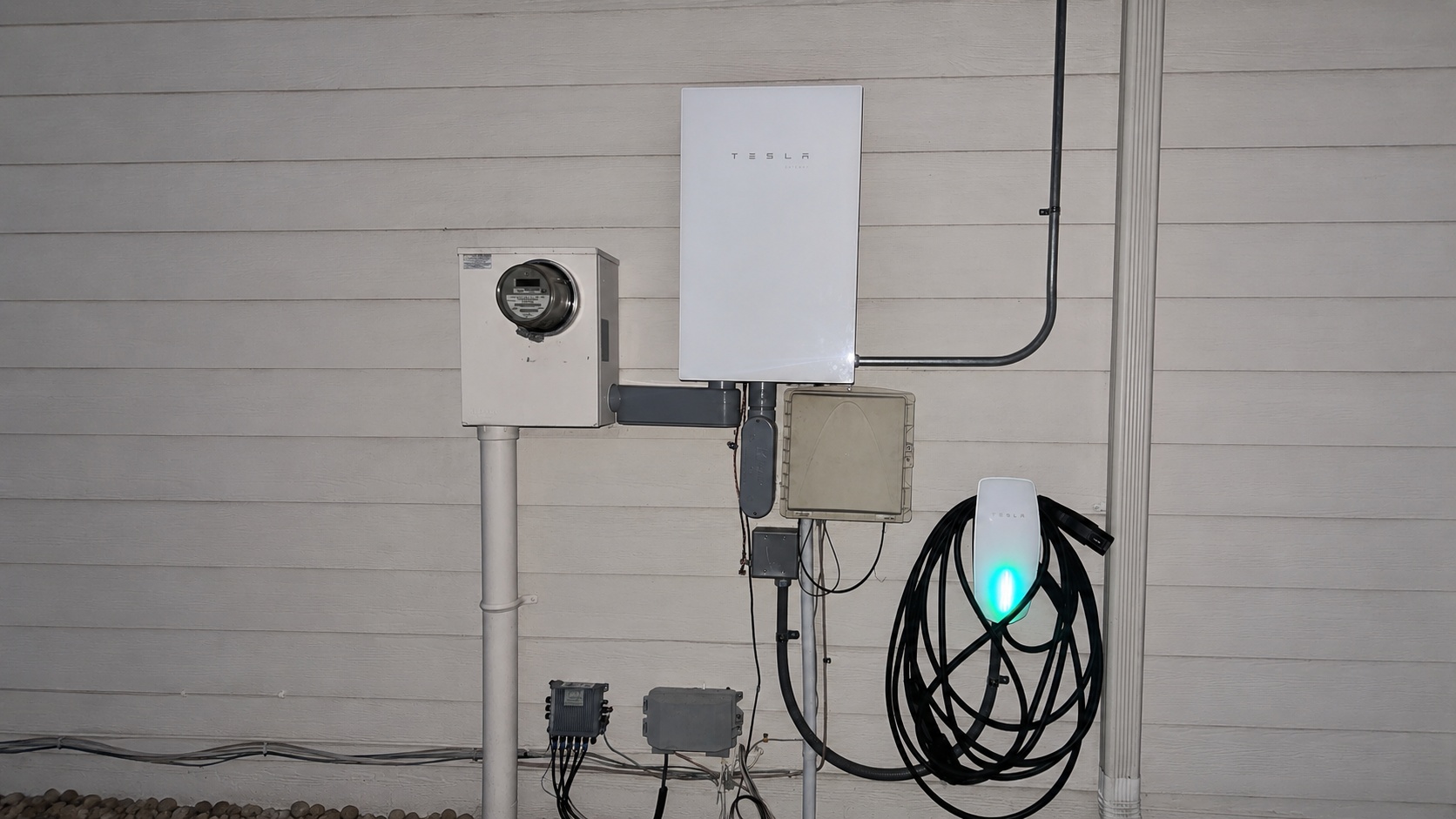
Probably not yet: one EV charger in a gas-heated house where a load calculation or 12 months of demand data shows room. A 24 or 32 amp charger, or a load-management device, often avoids the upgrade. See EV chargers on a 100 amp panel.
Not needed: the panel is out of spaces but the service has capacity. A subpanel or a few tandem breakers, where the panel allows them, solve a space problem for a fraction of the cost.
Across our own 100 to 200 amp upgrades from August 2024 to August 2026, the typical invoice was $2,500 to $3,500, with a median of $3,000, plus the permit and inspection line, which we bill at $350 to $750 depending on jurisdiction. Jobs where the mast, meter base and grounding are rebuilt start around $6,000. The panel upgrade cost guide has the full breakdown and a calculator.
What about 150 amp service?
A 150 amp service sits between the two and is common in homes built before 200 amps became the usual choice. Going from 150 to 200 amps is the same job as going from 100 to 200: new meter base or meter-main, service conductors sized for 200 amps, a 200 amp panel, grounding brought up to current code, and a permit and utility coordination. The price lands in the same range, because the parts and labor are the same.
A 150 amp service also has noticeably more headroom than 100 amps. Before paying to go to 200, have the load calculation done: a 150 amp house often takes a heat pump or an EV charger without an upgrade.
Yes. The NEC minimum service for a one-family dwelling is 100 amps (230.79(C)), and existing installations do not have to be upgraded when the code changes. New loads need a load calculation showing the service can carry them.
02Can you sell a house with 100 amp service?
Yes. Neither Oregon nor Washington requires 200 amps for a sale, and FHA's appraisal guidance sets no minimum amperage; the appraiser notes whether it appears adequate for the home's appliances. Panel brand and condition, such as Federal Pacific, Zinsco or a fuse box, matter far more to buyers than the amperage.
03Do most homes have 100 or 200 amp service?
Most do not have 100. A 2025 survey of 348 US single-family homes found 60% at 200 amps or more, 31% at 100 amps or less and 9% in between. Older neighborhoods, like much of inner Portland, have a higher share of 100 amp and smaller services.
04How many amps does a 2,000 square foot house need?
It depends on which appliances are electric. In our worked example, a 2,000 sq ft house with an electric range, dryer, water heater and central air calculates at about 103 amps. Adding a Level 2 EV charger takes it to about 115 amps at a 40% demand factor, or about 133 if the charger is counted at 100%, as many inspectors and the 2026 NEC do. A heat pump with electric backup heat instead of gas pushes it to 125 amps or more. A gas-heated house with gas appliances needs much less.
05Can you run 220 off a 100 amp panel?
Yes. A 100 amp residential panel is 120/240 volt, and dryers, ranges, water heaters and EV chargers run on two-pole 240 volt breakers in them routinely. You need open space for a two-pole breaker and a load calculation that fits.
06How many breakers are allowed in a 100 amp panel?
As many as the panel's label allows. The NEC's old 42-circuit limit was removed in 2008; each panel is now listed for a specific number of spaces and circuits, including which slots take tandem breakers. The total of breaker ratings is not limited by the service size.
07Does upgrading to 200 amp service increase home value?
We have not found credible appraisal data showing a set premium. It can make a house easier to sell to buyers planning EVs or heat pumps, and a permitted, defect-free panel removes an inspection objection.
08Is it expensive to upgrade from 100 amp to 200?
In our own Portland and Vancouver jobs from August 2024 to August 2026, a 100 to 200 amp upgrade typically cost $2,500 to $3,500, median $3,000, plus $350 to $750 for the permit and inspection. Rebuilding the mast, meter base and grounding pushes it to $6,000 and up.
Electrical panel upgrades and replacements for Portland and Vancouver, WA homes — 100A to 200A service upgrades, Federal Pacific and Zinsco swaps, permit and inspection included, priced in writing before we start.
A no-charge visual check of your home's electrical system — panel, grounding, outlets, GFCI and AFCI protection, smoke alarms and visible wiring. Roughly 45 minutes, written findings, no obligation.
A subpanel adds circuits where you need them without touching the service. The mistakes happen in the details: wire that is really rated 90 amps, neutrals bonded to ground, and detached buildings with no ground rods. Here is how it is done properly.
Every panel or service upgrade in Oregon needs an electrical permit and an inspection before the utility will reconnect. In Portland the permit fee is $212 for a service up to 200 amps, plus the 12% state surcharge. Here is who issues it, how to apply, and what happens on inspection day.
Oregon lets owners wire their own home without a license, but not without a permit, and not on a house that is for sale or rent. Portland adds its own conditions. Here is what the law allows on both sides of the Columbia, what is permit-free, and where DIY stops making sense.
Find out if your 100 amp service is really too small.
Tell us what you are adding and send a photo of your panel. We run the load calculation and tell you whether you need an upgrade, a subpanel, or nothing at all.