EV Charger Installations
Expert EV charger installation — assessment, setup, and maintenance for long-term performance at home or on-site.
View service
EV Charging · September 30, 2026
Short answer: often, yes. Whether a Level 2 charger fits on a 100 amp service is decided by a load calculation, not by the size of the panel alone. In a gas-heated home, a charger set to 24 or 32 amps frequently fits. When it does not, a listed energy management device can let the charger use only what the house is not using, which the electrical code accepts as a way to avoid a service upgrade.
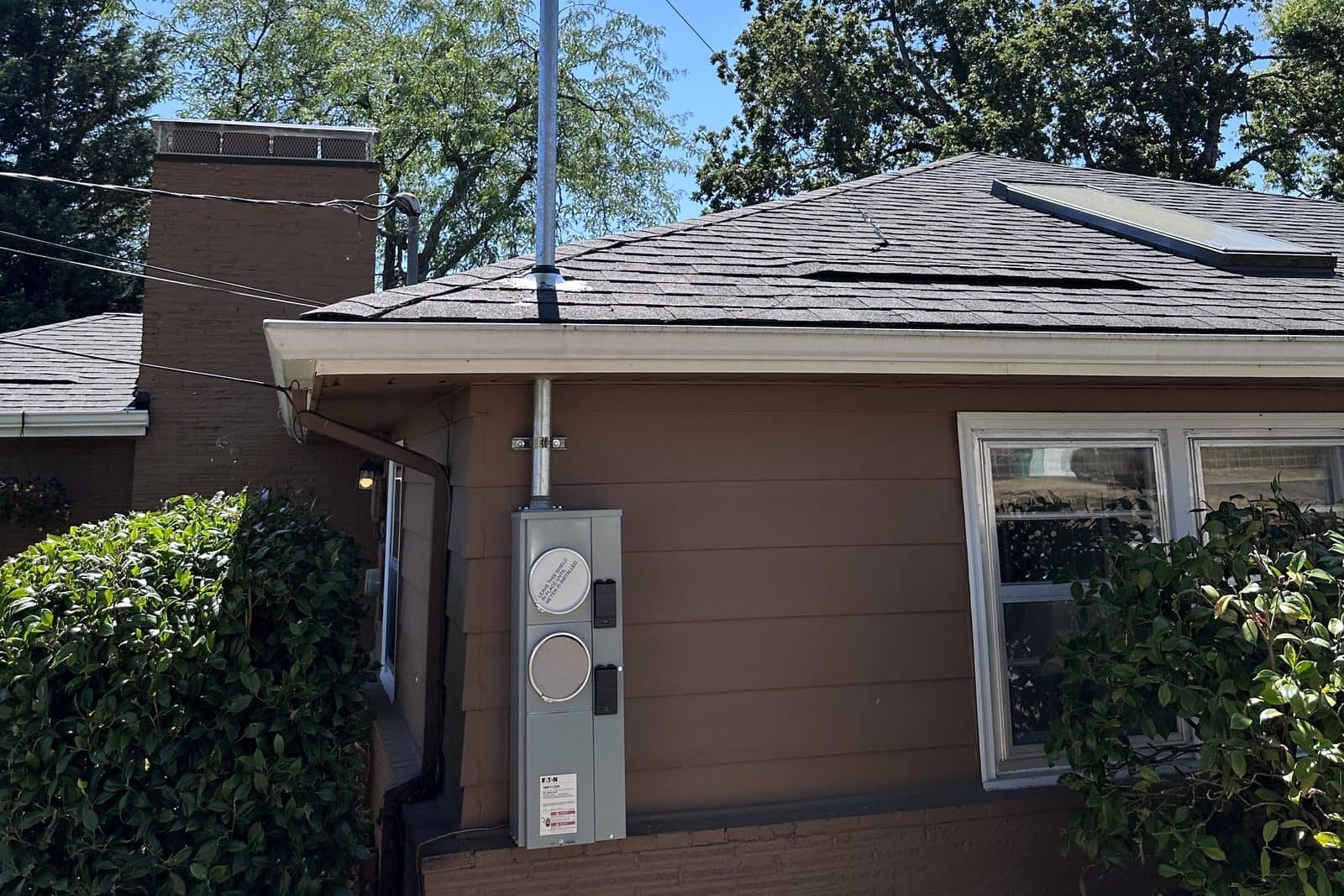
Upgrading to 200 amps is the right answer when the house is also getting a heat pump, an induction range or a second EV, or when the panel itself needs replacing. It is not automatically the first step, and quotes that jump straight to a $3,000 panel upgrade for a single charger in a gas-heated house deserve a second look.
Below: how the calculation works, what charger size makes sense, which load-management options exist and how inspectors treat them, the permit side in Portland and Vancouver, and what each route costs based on our own invoices.
Under the 2023 NEC, used in Washington and in Oregon until October 1, 2026, EV charging equipment is counted in a load calculation at 7,200 watts or its nameplate rating, whichever is larger (220.57). That goes into the house's existing load calculation along with everything else, and the result has to fit the service.
For an existing house there are two ways to get the starting number. The first is a calculation from what is installed: floor area, kitchen and laundry circuits, and every fixed appliance, with demand factors applied. The second is often more favorable: the code (220.87) allows using the highest 15-minute demand from the last 12 months of utility data, multiplied by 125%, then adding the new charger. Utilities in the metro increasingly have smart meters that record this; ask yours for 12 months of interval data.
In our 100 amp service guide we worked a 2,000 square foot example: with an electric range, dryer and water heater plus central air it calculates at about 103 amps, and adding a charger takes it to about 115, or about 133 if the inspector counts the charger at 100%. The same house on gas appliances has plenty of room. The appliances decide it, not the square footage.
Level 2 chargers are continuous loads, so the circuit has to be rated at 125% of the charger's output. A 48 amp charger needs a 60 amp circuit; a 24 amp charger needs a 30 amp circuit. Many hardwired chargers can be set to a lower output during installation, and the 2023 NEC lets the lower setting count in the load calculation when access to the setting is restricted.
For most commuters, a smaller setting costs almost nothing in practice. Tesla's published figures for a Model 3 or Y show 24 amps adding about 22 miles of range per hour. Eight hours overnight at that rate is roughly 175 miles, which covers most days in the Portland-Vancouver metro several times over.
| Charger output | Circuit breaker | Power | Range added per hour |
|---|---|---|---|
| 16 A | 20 A | 3.8 kW | about 15 miles |
| 24 A | 30 A | 5.7 kW | about 22 miles |
| 32 A | 40 A | 7.7 kW | about 30 miles |
| 40 A | 50 A | 9.6 kW | about 37 miles |
| 48 A | 60 A | 11.5 kW | about 44 miles |
Range per hour varies by vehicle; trucks and larger SUVs add fewer miles per kilowatt. The Department of Energy's rule of thumb for Level 2 is about 25 miles per hour of charging at around 7 kW.
When the calculation does not fit, the code has an answer besides a bigger service. The 2023 NEC allows an energy management system to limit the charger so the service is never overloaded. When a system like that is used, the charger is counted at the maximum the system allows rather than its full rating (625.42(A)), and a whole-feeder system can be counted at its setpoint (220.70).
In plain terms, a monitor watches the house's total current and slows or pauses the charger when the dryer, oven and heat are all running, then lets it run again when they are not. Because EV charging mostly happens overnight, it usually loses little or no charging time.
| Option | How it works | Things to know |
|---|---|---|
| Lower charger setting | Set a hardwired charger to 24 or 32 A at install | Cheapest; needs a load calculation that fits at that setting |
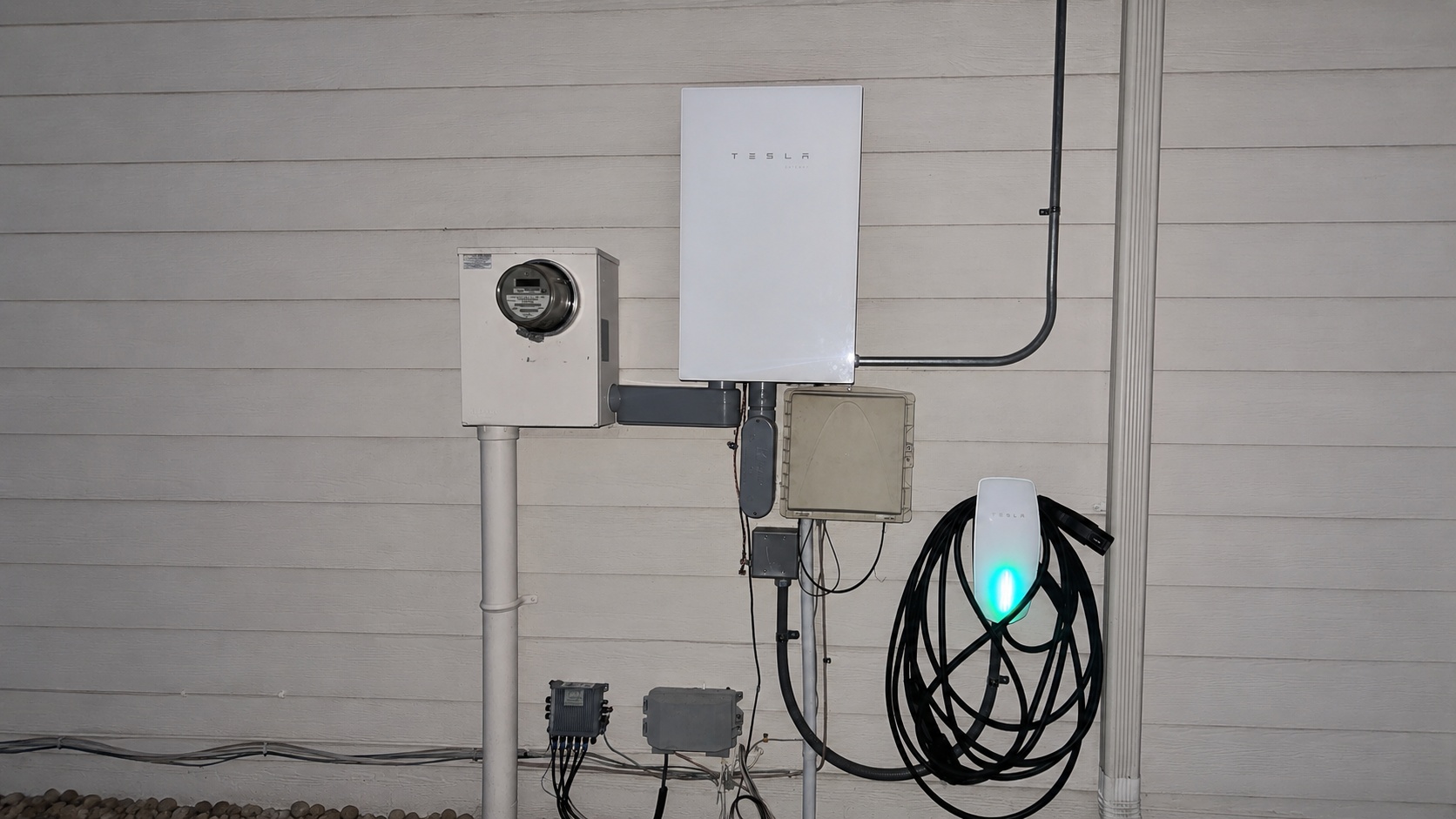
| Charger with built-in load management | Charger and a panel monitor adjust the charge rate to total house load (for example Emporia Pro, Tesla Wall Connector with power management) | Some need a separate meter and certified installer; check the charger's own requirements |
| Separate load controller | A device between the panel and the charger cuts charging when house load gets high (for example DCC-series controllers) | Works with most chargers; the one we checked cuts power at 80% of the main breaker rating |
| Circuit sharing with the dryer | A smart splitter lets the charger and dryer share one 240 V circuit, pausing the car when the dryer runs | The inspector decides whether it counts as load management in the calculation; ask before you buy |
| Level 1 on a 120 V outlet | Plug the car into a standard outlet | No new circuit; about 3 to 5 miles of range per hour |
| Service upgrade to 200 A | New meter base, service and panel | Right answer if a heat pump or second EV is coming anyway |
Any device used this way has to be listed for the purpose and installed to its instructions, and the permit drawings or notes should say how the charger is limited. We confirm with the local inspector before choosing a device, because acceptance of the plug-in splitter type in particular varies.
Load management is a tool for fitting one more load onto a service that is close to full. It is not a substitute for capacity when the whole house is going electric. We recommend going to 200 amps when any of these are true.
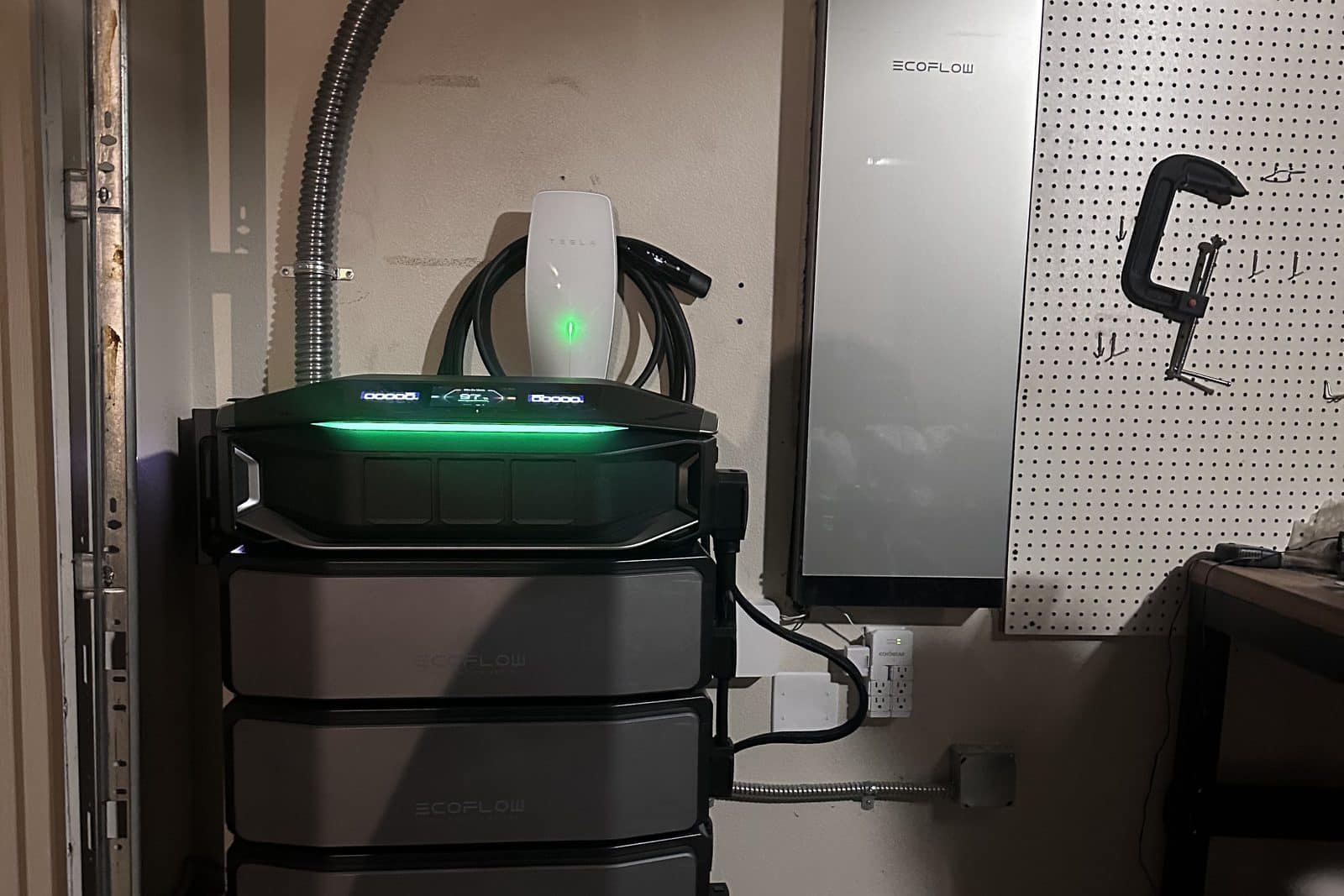
A Level 2 charger, hardwired or on a new 240 volt outlet, is a new branch circuit and needs an electrical permit and inspection on both sides of the river. In Oregon, a licensed contractor can often cover a wall-mounted charger with a state minor label, a $14 inspection label, instead of a full permit, but only for one new circuit of 40 amps or less at 240 volts, in a garage where the panel is within sight of the charger and not in a wet or damp location. Bigger chargers and panel or service changes need a regular permit.
In the City of Portland, a standalone circuit permit is $174 for the first circuit plus Oregon's 12% surcharge; if the charger is part of a panel upgrade, each added circuit is $21 on the same permit. In Washington, the permit comes from L&I or, inside Vancouver city limits, from the City of Vancouver. Our permit guide has the full fee tables.
These are our own numbers from paid invoices, August 2024 to August 2026, not market averages. The charger hardware can be yours or supplied by us.
| Job | Typical price | Notes |
|---|---|---|
| Level 2 charger, panel nearby | $600 to $900 | Median $700 across 15 installs |
| Level 2 charger, longer or harder run | $900 to $1,400 | Distance and routing drive the price |
| Load-management device | Quoted per device | Depends on the device and the charger |
| 100 A to 200 A service upgrade | $2,500 to $3,500 | Median $3,000; plus $350 to $750 for permit and inspection |
Rebates can cover part of the charger job depending on your utility: Clark Public Utilities pays $500 for a connected Level 2 charger, and Pacific Power pays up to $1,500 for income-qualified customers. The details and eligibility are in our EV charger rebate guide.
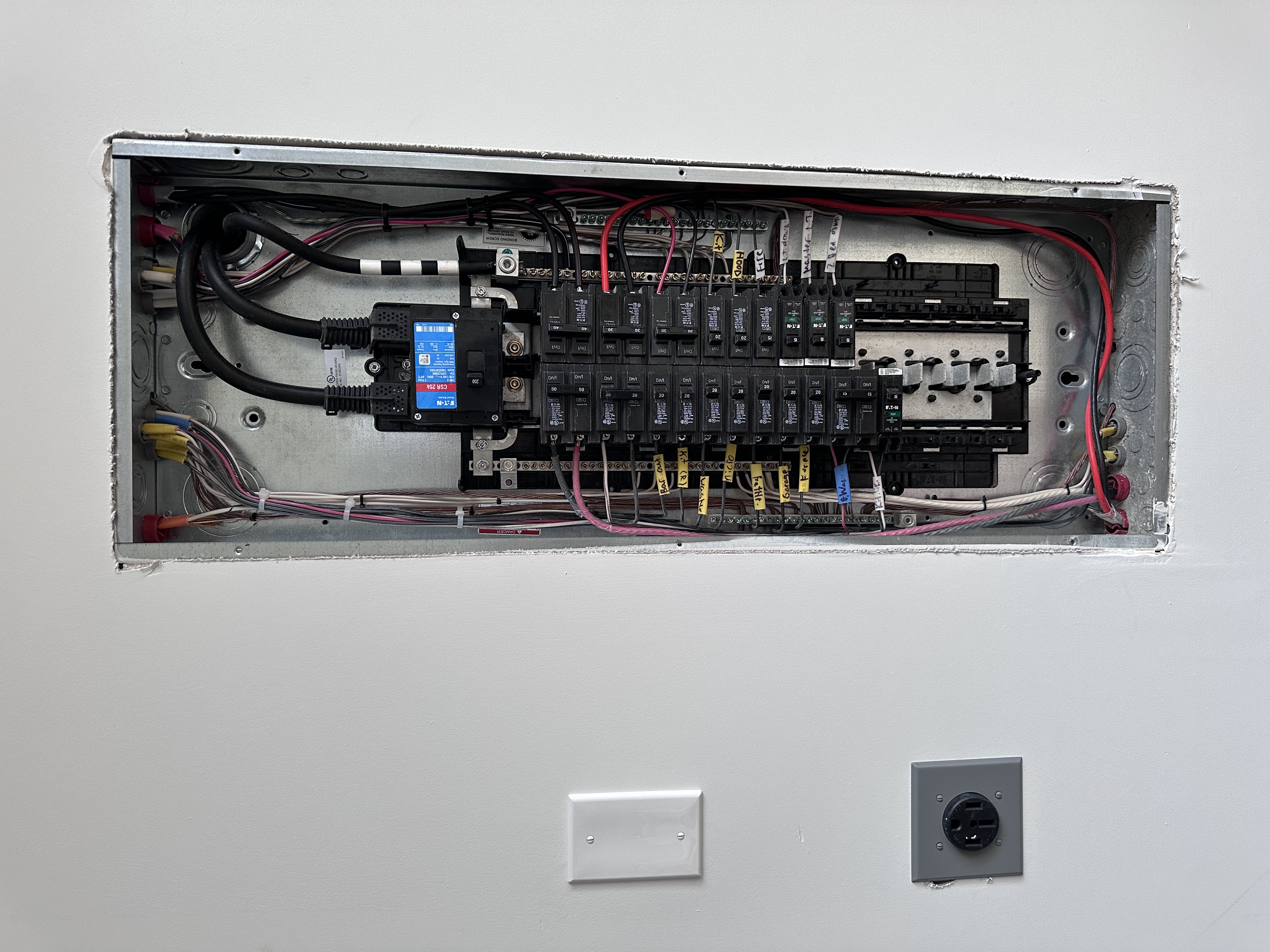
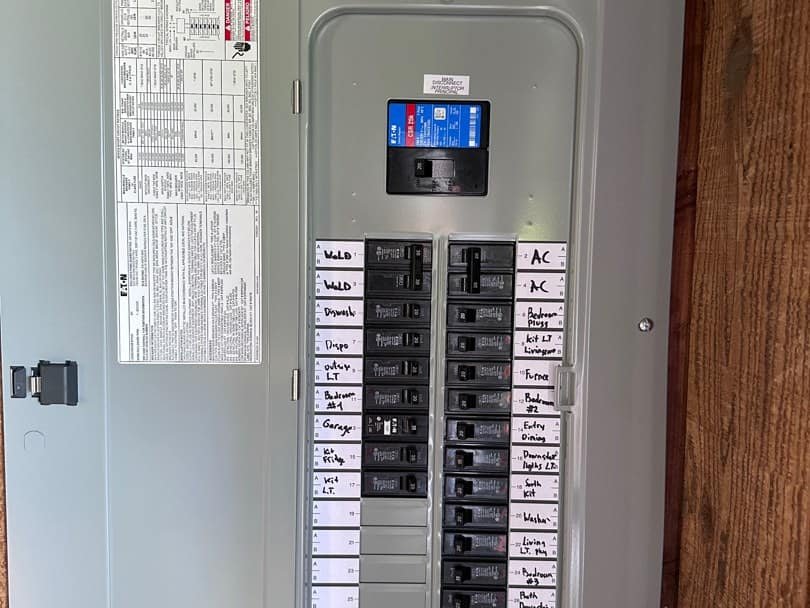
We can usually tell you which route fits from a few photos, before anyone visits.
Answers
Related services
Expert EV charger installation — assessment, setup, and maintenance for long-term performance at home or on-site.
View serviceElectrical panel upgrades and replacements for Portland and Vancouver, WA homes — 100A to 200A service upgrades, Federal Pacific and Zinsco swaps, permit and inspection included, priced in writing before we start.
View serviceFull-service residential electrical work for Portland and Vancouver homeowners — panel upgrades, rewiring, lighting, and everyday repairs done safely and to code.
View serviceKeep reading
A 100 amp service is still legal, still sellable and still enough for plenty of gas-heated homes. It stops being enough when a heat pump, EV charger or electric range arrives. Here is how to tell which side of that line your house is on, with a worked load calculation.
Read articleA subpanel adds circuits where you need them without touching the service. The mistakes happen in the details: wire that is really rated 90 amps, neutrals bonded to ground, and detached buildings with no ground rods. Here is how it is done properly.
Read articleEvery panel or service upgrade in Oregon needs an electrical permit and an inspection before the utility will reconnect. In Portland the permit fee is $212 for a service up to 200 amps, plus the 12% state surcharge. Here is who issues it, how to apply, and what happens on inspection day.
Read articleCharger first, panel only if needed
Send photos of your panel and meter and tell us what is electric in the house. We'll tell you whether it fits, what setting to use, and give you a written price.