EV Charger and Electrical Rebates in Portland and Vancouver: What's Actually Left in 2026
By Power Professor · Updated October 9, 2026 · 14 min read
Short answer: both federal credits are gone. The 30% credit for a home EV charger, worth up to $1,000, expired for anything placed in service after June 30, 2026. The 25C credit that covered up to $600 of an electrical panel upgrade expired six months before that, at the end of 2025. Neither is coming back on its own.
What replaced them is a patchwork of utility programs, and the amounts differ enormously depending on who sends you your power bill. A Vancouver homeowner gets a flat $500 from Clark Public Utilities with no income test. A Beaverton homeowner on Pacific Power can get up to $1,500 — but only if the household is income-qualified. A homeowner in inner Portland on PGE currently gets nothing toward the charger itself.
Below is every program we could verify as of August 30, 2026, what each one actually pays, who qualifies, and where the paperwork trips people up. We install to these programs' requirements as a matter of course, so the section at the end covers the two things that most often cost people the rebate after the work is already done.
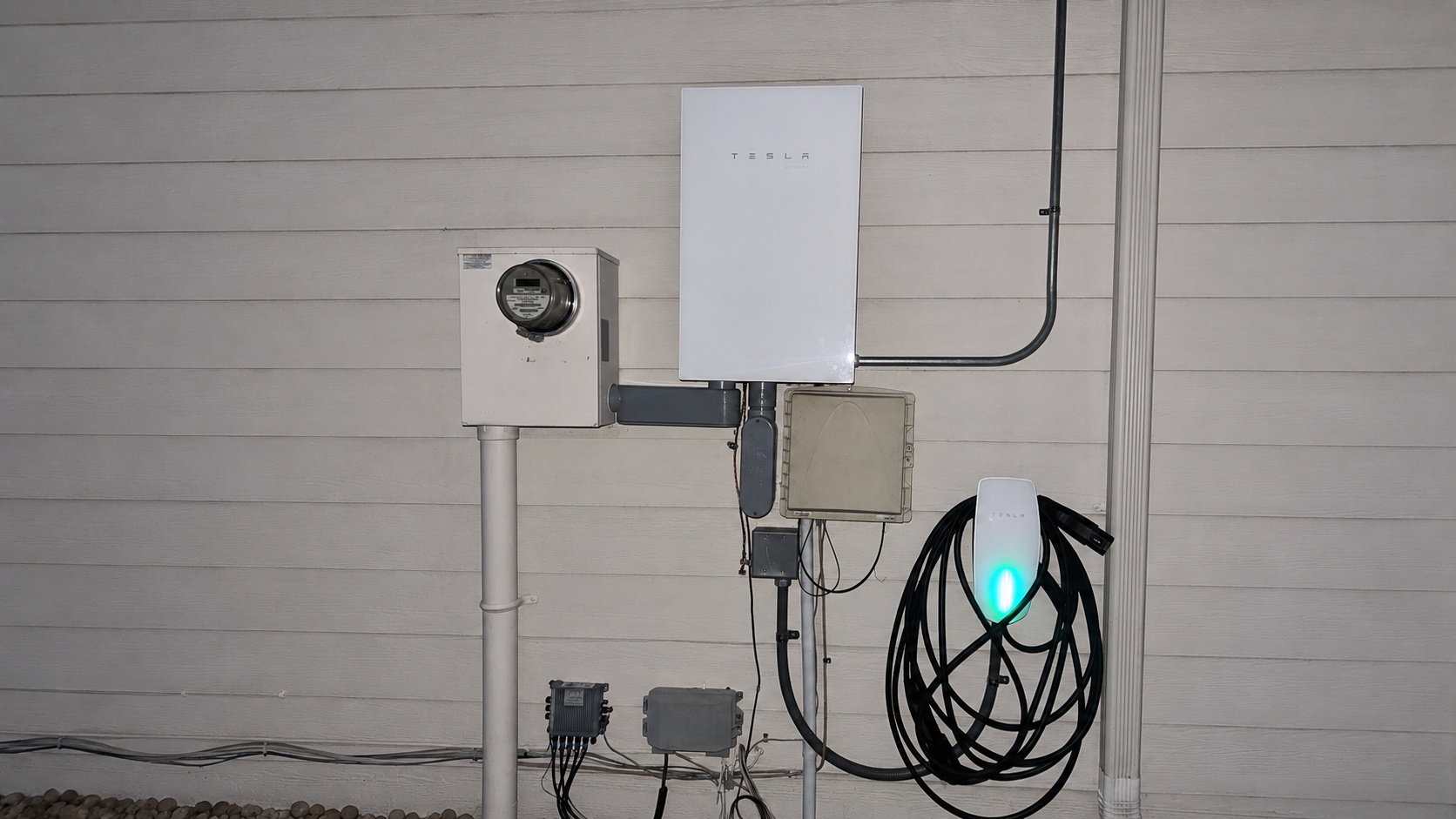
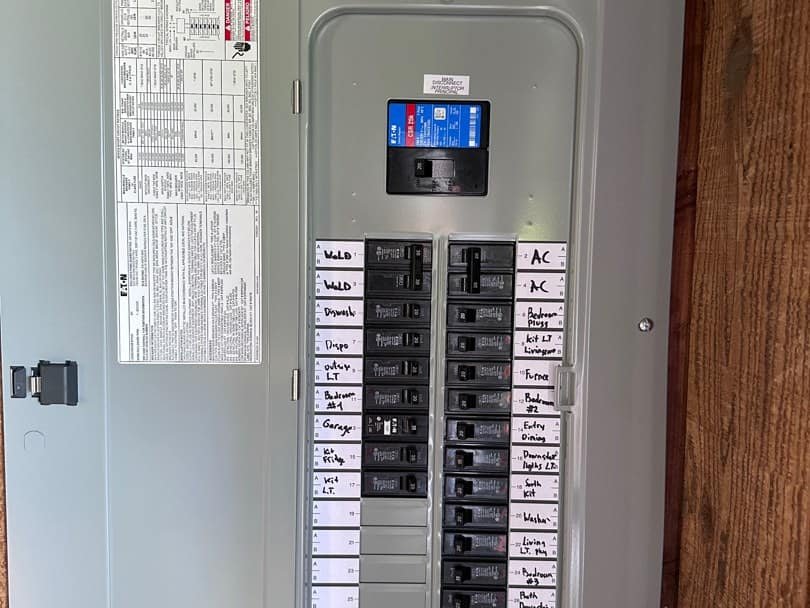
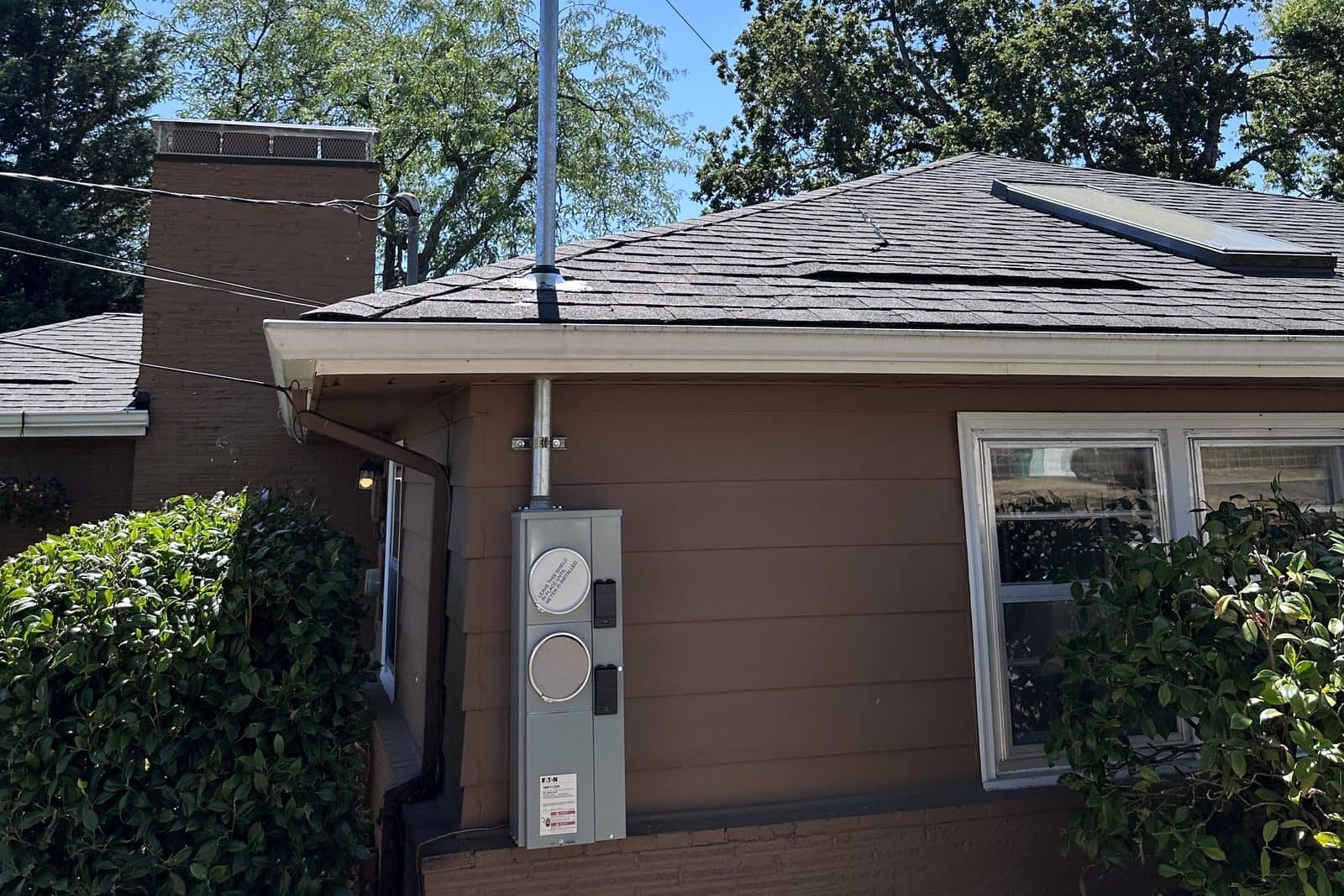
Before you buy a charger, have the panel looked at: a Level 2 charger needs a dedicated 240-volt circuit sized to the unit, and if the panel is already full that is a subpanel or service conversation first, not a reason to skip the charger. That one visit is what saves surprises later.
The two federal credits have expired
This is the part most contractor websites in the metro still have wrong, so it is worth being exact. Both credits were shortened by federal legislation in 2025, and both expiry dates have now passed.
If your charger or panel was placed in service before the relevant date, you may still be able to claim the credit on the return for that tax year. Placed in service means finished and usable, not ordered or paid for. That is a question for your tax preparer, not for an electrician — we are naming the dates, not giving tax advice.
Federal credits, status as of August 2026
Credit
What it covered
Status
25C Energy Efficient Home Improvement Credit
30% of an electrical panelboard, sub-panel, branch circuit or feeder, up to $600. Required 200 amp capacity or greater and had to serve qualifying energy property. Labor counted.
Expired for property placed in service after December 31, 2025
30C Alternative Fuel Vehicle Refueling Property Credit
30% of a home EV charger and its installation, up to $1,000. Also carried a census-tract restriction that excluded much of urban Portland even while it was alive.
Expired for property placed in service after June 30, 2026
What is actually live right now
Everything still paying out is either a utility program or a state program. Here is the whole picture in one place, with the detail on each below.
Live programs, Portland-Vancouver metro, updated September 2026
Program
Pays
Who qualifies
Clark Public Utilities EV charger rebate
$500 connected Level 2 charger; $100 non-connected or mobile connector
Clark PUD residential customers. No income test. Max two per household
Pacific Power home charger rebate (Oregon)
Up to $1,500 hardwired Level 2; up to $500 for a 240V outlet
Pacific Power customers at or below 150% of Oregon median income
PGE Smart Charging
$50 to enroll, then $25 twice a year
PGE customers with an eligible connected charger or EV
Washington state HEAR
50% of equipment and installation under 150% AMI; 100% under 80% AMI
Covers panel and wiring upgrades needed for new electric equipment; Clark County via United Hub
Energy Trust of Oregon
Heat pumps, heat pump water heaters, insulation
Nothing for panels, service upgrades, wiring or EV circuits
Oregon HEAR
Not open to homeowners yet
Contractor enrollment opens October 12, 2026; homeowner rebates await federal approval
Portland Energy Friendly Homes (PCEF)
Heat pumps and related work, including a panel or service upgrade needed for a fuel-switching heat pump
Portland homeowners at or below 150% AMI
Vancouver and Clark County: Clark PUD pays $500
This is the simplest and most generous no-strings program in the metro. Clark Public Utilities pays $500 toward a qualified connected Level 2 charger, or $100 for a non-connected Level 2 or a mobile connector. There is no income requirement.
The word doing the work is connected. To get the $500 the charger has to be ENERGY STAR rated and Wi-Fi connected, and it has to be new. A perfectly good unconnected charger drops you to the $100 tier, so this is worth settling before anyone buys hardware.
You can claim up to two rebates per household, and the paperwork has to be in within two years of the purchase. Clark PUD also states that an electrical permit is required for most Level 2 installations — which is not optional and is included in what we quote.
Separately, Clark PUD runs a used-EV rebate worth up to $2,000 for income-qualified customers. That one is about the car, not the wiring, but it is on the same program page.
Parts of Oregon: Pacific Power pays up to $1,500
Pacific Power's home charger rebate is the largest single amount available in the metro: up to $1,500 for a hardwired Level 2 charger, or up to $500 for a 240V outlet. It is income-qualified — the household has to be at or below 150% of Oregon median income, which starts around $123,500 for a single-person household and rises with household size.
What makes this one genuinely useful is what counts as a qualified expense. Unlike most charger rebates, Pacific Power's covers licensed electrician labor, the charger or 240V plug, materials and permits — not just the hardware. On a straightforward install that can mean the rebate covers most of the job.
The conditions worth knowing before you start: the equipment has to be purchased after January 1, 2026, the work has to be done by a licensed electrician, you have one year to apply, and customers who took a previous Pacific Power EV incentive are not eligible again.
The catch is territory. Pacific Power serves parts of the west side of the metro and the Oregon coast; most of inner Portland is PGE. Your bill tells you which — see below.
If you are a PGE customer
This is the awkward one. Portland General Electric serves most of the Portland metro, and as of August 2026 the federal Alternative Fuels Data Center lists PGE's residential charging infrastructure incentives as none currently offered. PGE's own pages mention that customers may be eligible for rebates on a qualifying Level 2 charger but do not publish an amount, and we could not verify one.
What PGE does pay is the Smart Charging enrollment reward: $50 to sign up, then $25 twice a year for taking part in Smart Charging seasons. That is real money, but it is a behaviour programme rather than an installation rebate, and it does not offset the cost of the wiring.
If you have seen a specific PGE charger rebate figure advertised locally, treat it with suspicion. One Beaverton contractor's site was advertising a "$300 PGE rebate" in August 2026 that we could not find any support for on PGE's or the program administrator's pages.
One update since we first published: PGE's own special offers page now mentions rebates on electrical panel upgrades through the Smart Charging program, but it does not publish an amount or the conditions, and we could not confirm them on a PGE page. Figures quoted elsewhere online come from older third-party pages. If you are on PGE and planning a panel upgrade for an EV charger, call PGE before the work starts and ask what applies to your address.
Panel and wiring upgrades: what pays and what does not
The charger rebates above are for the charger and its circuit. If your panel has to be upgraded first, that is a separate question, and the answer depends on the state.
Washington. The state's Home Electrification and Appliance Rebates program is funded and active, and it explicitly covers electric panel and wiring upgrades required to install new electric equipment. Households under 150% of area median income get 50% of equipment and installation costs; under 80% AMI it is 100%. In Clark County the administrator is United Hub. Intake opens and closes by administrator rather than statewide, so check before you count on it.
Oregon. The equivalent federal program is not open to homeowners yet. The Oregon Department of Energy still says no rebates are available, but in September 2026 it announced that contractor enrollment opens on October 12, 2026, with single-family rebates to follow once the US Department of Energy approves the launch. The published plan is up to $4,000 toward an electrical panel and $2,500 toward wiring. Worth watching; not worth waiting on for a job you need done now. In the City of Portland, income-qualified homeowners can already get a panel covered when it is needed for a heat pump that replaces gas or oil heat, or for a heat pump water heater, through the program below.
Energy Trust of Oregon comes up constantly in this conversation and it is worth being blunt: reading their January 2026 residential incentive sheet end to end, there is no incentive for a panel upgrade, a service upgrade, wiring or a 240V circuit. Energy Trust pays for heat pumps, heat pump water heaters, insulation and a handful of other measures. If a panel upgrade is what enables a heat pump you are having installed, the heat pump incentive may still apply — the panel itself does not.
Is there such a thing as a free electrical panel upgrade?
For most households, no. There is no federal tax credit for a panel installed in 2026, no utility in the metro publishes a panel rebate you can count on (PGE mentions one through Smart Charging but lists no amount), and Energy Trust of Oregon has no panel incentive. Offers of a "free panel upgrade" in online ads are almost always lead-generation for solar or battery sales, where the panel is folded into a much larger contract.
For income-qualified homeowners it can be genuinely free, or close to it, when the panel is needed to install new electric equipment such as a heat pump, heat pump water heater, induction range or EV charger. These are the programs that actually do it as of late September 2026.
Programs that can pay for a panel upgrade, September 2026
Panel or service replacement when required for a heat pump that replaces the home's primary heating fuel, or for a heat pump water heater; electrical repair as a critical repair
Open to homeowners at or below 150% AMI
Oregon HEAR (federal)
Statewide
Up to $4,000 for a panel and $2,500 for wiring; up to 100% under 80% AMI
Not open to homeowners; contractor enrollment starts October 12, 2026
Washington federal HEAR
Statewide
Expected to follow the same federal caps
Not launched; awaiting federal authorization
A few local repair programs can also fix unsafe electrical work for low-income, older or disabled homeowners, usually with long waiting lists: Portland Housing Bureau's home repair loan inside the Interstate Corridor, the City of Vancouver Housing Rehabilitation Program (a deferred loan with a backlog of a year or more), and Clark County's Housing Preservation grants (non-emergency waitlist currently closed). They treat electrical work as a hazard repair, not an upgrade.
If you think you qualify, apply to the program before hiring anyone. These programs pay through their own enrolled contractors and will not reimburse work that was done first. If you do not qualify, the honest answer is that a panel upgrade is paid for out of pocket; our own 100 to 200 amp upgrades typically cost $2,500 to $3,500. The panel cost guide has a calculator.
How to tell which utility you are on
Because the amounts range from nothing to $1,500 depending purely on the utility, this is the first thing to check — before you shop for a charger, not after.
Look at the top of your electricity bill, not your gas bill. In this metro it will say Portland General Electric, Pacific Power, or Clark Public Utilities. City boundaries are no guide at all: neighbouring streets in Beaverton and Hillsboro can be on different utilities, and everything on the Washington side of the river is Clark PUD.
If you tell us which one when you call, we will tell you which programme applies and what it is likely to be worth on your particular job before we quote.
The two things that cost people the rebate
Almost every rejected claim we hear about comes down to one of two things, and both are avoidable.
No permit. Clark PUD says outright that an electrical permit is required for most Level 2 installations, and every one of these programmes assumes code-compliant, inspected work. An uninspected install by an unlicensed installer is cheaper on the day and worthless when you file. We pull the permit and meet the inspector as part of the job, and the permit cost is inside our quote rather than added afterwards.
Buying the wrong hardware first. The single most common version is buying an unconnected charger in Clark County and losing $400, or buying equipment before January 1, 2026 and falling outside Pacific Power's window. Ask before you buy.
We are not tax advisers and we do not file your claim for you. What we do is install to the standard the programme requires and hand you the paperwork — model and serial number, permit number, itemised invoice separating labour, materials and permit — in the form the programme asks for.
Answers
Frequently asked questions
01Is the $1,000 federal EV charger tax credit really gone?
Yes. The 30C credit expired for property placed in service after June 30, 2026. If your charger was finished and usable before that date, ask your tax preparer whether you can still claim it on that year's return. Anything installed since is not eligible.
02Can I get a federal tax credit for upgrading my electrical panel?
Not for a panel installed in 2026. The 25C credit, 30% up to $600 for a panel of 200 amps or more serving qualifying equipment such as a heat pump, ended for property placed in service after December 31, 2025. If your panel was finished before that date, ask your tax preparer whether you can still claim it on that year's return.
03Is there a free electrical panel upgrade program?
Only for income-qualified households, and only when the panel is needed for new electric equipment. In Clark County, Washington's state HEAR program through United Hub pays 100% under 80% of area median income and 50% under 150%. In Portland, Energy Friendly Homes can cover a panel needed for a heat pump that replaces gas or oil heat, or for a heat pump water heater, for homeowners at or below 150% AMI. Oregon's federal HEAR rebates are not open to homeowners yet.
04How much does Clark PUD pay for an EV charger?
$500 for a qualified connected Level 2 charger — it has to be ENERGY STAR rated, Wi-Fi connected and new — or $100 for a non-connected Level 2 or a mobile connector. No income test, up to two per household, and you have two years from purchase to file.
05Do I qualify for the Pacific Power $1,500 rebate?
Only if you are a Pacific Power customer and your household is at or below 150% of Oregon median income. It covers licensed electrician labour, the charger, materials and permits, the equipment must have been purchased after January 1, 2026, and you have one year to apply. Customers who took a previous Pacific Power EV incentive are not eligible again.
06Does PGE pay anything toward a home charger?
Not toward the installation, as far as we can verify. PGE's Smart Charging programme pays $50 to enrol and $25 twice a year for participating, which is worth having but does not offset the cost of the circuit.
07Will Energy Trust of Oregon help with my panel upgrade?
No. Reading their current residential incentive sheet, Energy Trust has no incentive for panel upgrades, service upgrades, wiring or 240V circuits. They pay for heat pumps, heat pump water heaters and insulation. If the panel upgrade is what makes a heat pump possible, the heat pump incentive may still apply to the heat pump.
08Can I get help with a panel upgrade in Washington?
Possibly. Washington's HEAR programme is funded and active and explicitly covers panel and wiring upgrades needed to install new electric equipment — 50% of cost under 150% of area median income, 100% under 80%. In Clark County it runs through United Hub. Intake opens and closes by administrator, so check current status before you rely on it.
09Do I need a permit to get these rebates?
In practice, yes. Clark PUD states that an electrical permit is required for most Level 2 charger installations, and the programmes assume inspected, code-compliant work. We pull the permit and meet the inspector as part of the job.
A 100 amp service is still legal, still sellable and still enough for plenty of gas-heated homes. It stops being enough when a heat pump, EV charger or electric range arrives. Here is how to tell which side of that line your house is on, with a worked load calculation.
A subpanel adds circuits where you need them without touching the service. The mistakes happen in the details: wire that is really rated 90 amps, neutrals bonded to ground, and detached buildings with no ground rods. Here is how it is done properly.
Every panel or service upgrade in Oregon needs an electrical permit and an inspection before the utility will reconnect. In Portland the permit fee is $212 for a service up to 200 amps, plus the 12% state surcharge. Here is who issues it, how to apply, and what happens on inspection day.