Residential Electrical Services
Full-service residential electrical work for Portland and Vancouver homeowners — panel upgrades, rewiring, lighting, and everyday repairs done safely and to code.
View service
Home Safety · August 21, 2026
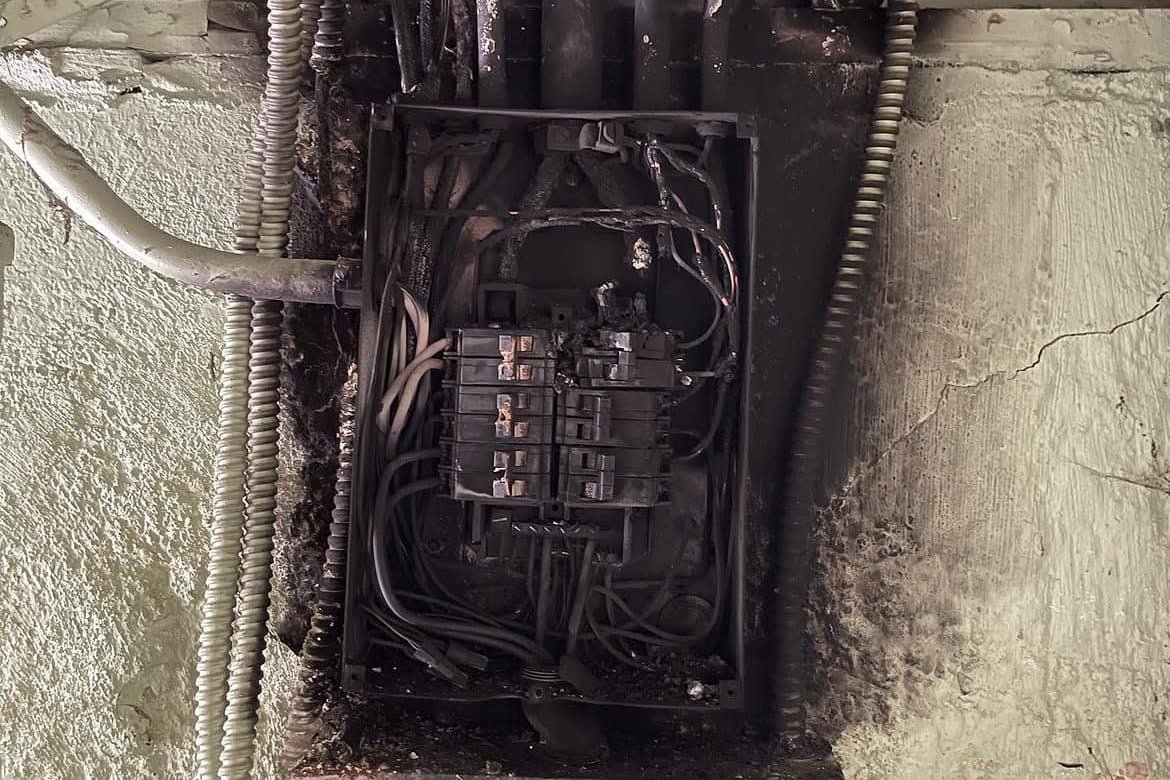
About 27 percent of Portland's housing stock was built before 1940, roughly 81,000 homes according to Census data, and almost all of them started life with knob-and-tube wiring. Twenty-five years later, the building boom that filled out East Portland, Beaverton, Gresham, and much of Vancouver and Clark County coincided with the 1965–1973 window when builders ran aluminum wire to outlets and switches because copper had gotten expensive. Between the two, a large share of the houses we're called to in the metro have wiring that was never designed for a 2026 household.
Neither one is an automatic emergency. Both are a real fire and insurance problem when they're overloaded, spliced badly, buried in insulation, or simply ignored. This guide covers how to tell what you have, what Oregon and Washington rules say about it, what the repair options actually are (including which ones the Consumer Product Safety Commission does and doesn't endorse), and what rewiring a Portland-area house costs this year.
If you're smelling something burning, seeing scorched outlets, or a breaker keeps tripping, stop reading and call us: that's an emergency visit, not a research project.
You don't need to open anything to get a strong hint. The year the house was built, plus a flashlight in the attic, basement, or garage, usually answers it:
Knob-and-tube was a good system for its era. The wires run with air around them, which is how they shed heat, and a house in 1925 had a few lights, a radio, and maybe an iron. Four things turned it into a liability:
The load. Space heaters, window air conditioners, hair dryers, microwaves, and a home office full of chargers pull far more current than these circuits were fused for. The common workaround, a bigger fuse, is exactly how the wire ends up running hot inside a wall.
No ground. There's no equipment grounding conductor, so surge protectors don't work, GFCI protection has to be added deliberately, and anything with a metal case relies on you not being the path to ground.
Insulation, both kinds. The rubber and cloth on the conductors gets brittle and falls off where it's been touched, and blown-in attic insulation piled on top of the wiring removes the air gap the system depends on. That's why both states treat insulating over knob-and-tube as a regulated act rather than a weekend project (more on that below).
A century of modifications. Every previous owner who added an outlet spliced into it somewhere, frequently without a box, and frequently with modern cable that's now sharing an overfused circuit.
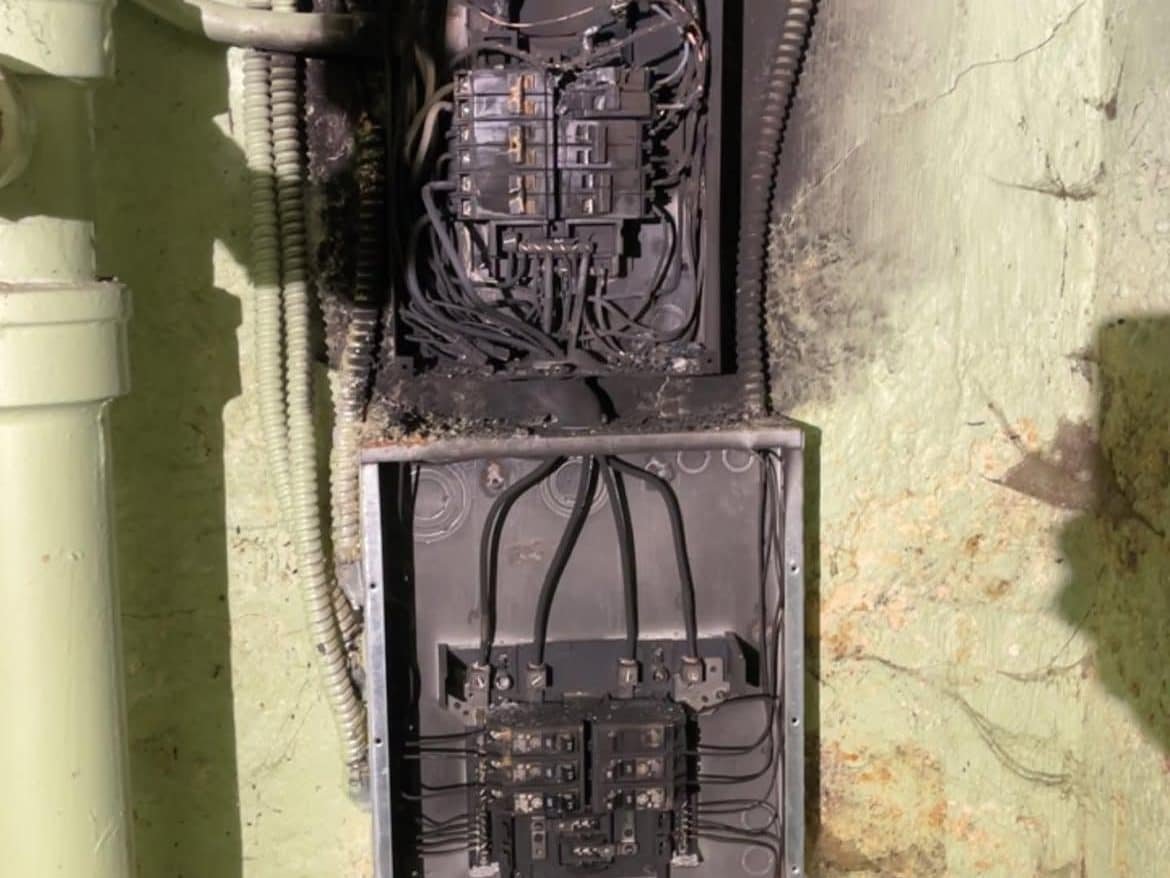
This is the part that catches homeowners mid-project, usually when a weatherization contractor shows up and stops.
Washington. State electrical rules (WAC 296-46B-394) allow thermal insulation to be installed over concealed knob-and-tube only after a licensed electrical contractor has surveyed the wiring and sent Labor & Industries a written certification that it's in good condition, with no improper overcurrent protection, no deteriorated insulation, and no improper splices. Every circuit has to be protected at the 60°C rating for the wire, using breakers or Type S fuses, and foam insulation is prohibited outright.
Oregon. Energy Trust of Oregon's insulation incentives require that active knob-and-tube in attics, walls, or floors be decommissioned and removed before insulation goes in, or that the electrical system be inspected and approved in writing by a certified electrical inspector or a general supervising electrician working for a licensed contractor. Most weatherization contractors in the metro apply the same rule whether or not an incentive is involved, because the liability is theirs.
In practice, that turns an attic insulation job on a 1920s Laurelhurst or Sellwood bungalow into an electrical decision first: certify the knob-and-tube that's left, or replace the circuits in the attic and then insulate. Replacement is usually the better money, because the survey only buys you the right to insulate over wiring that is still ungrounded and still undersized.
Aluminum itself conducts electricity fine; utilities and electricians still use large-gauge aluminum for service entrances and feeders every day, including the range and dryer circuits in new homes. The problem is the small 15- and 20-amp branch circuits of the late 1960s and early 1970s, and specifically the connections at every outlet, switch, light, and splice.
Aluminum oxidizes into a poor conductor, expands and contracts more than copper as it heats and cools, and "creeps" under the pressure of a terminal screw. Over a few decades, connections loosen, resistance rises, and the connection heats up, which loosens it further. The Consumer Product Safety Commission's research found that homes wired with pre-1972 aluminum wire are 55 times more likely to have one or more connections reach fire-hazard conditions than homes wired with copper.
Warning signs are the same ones you'd expect from any bad connection: cover plates that are warm to the touch, flickering or dimming at one outlet, a faint plastic or burning smell, discolored or melted outlet faces, outlets that stopped working, and breakers that trip for no obvious reason. Any of those in a 1965–73 house means stop using that circuit and get it looked at.
There are five approaches you'll see quoted. They are not interchangeable, and your insurer may only accept some of them, so ask your carrier before you choose.
| Method | What it is | CPSC position | Typical 2026 cost, whole home |
|---|---|---|---|
| Full copper rewire | Aluminum branch circuits are abandoned and replaced with copper | The complete solution | $12,000 – $20,000+, depending on size and access |
| COPALUM crimp pigtails | A short copper pigtail is cold-welded to each aluminum conductor with a proprietary crimp tool, at every device and splice | "A safe and permanent repair," proven over decades | $3,500 – $8,000; requires a certified installer and the specialized tooling, so lead times run weeks |
| AlumiConn connectors | A listed lug-style connector joins the aluminum wire to a copper pigtail at each connection | "The next best alternative for a permanent repair" where COPALUM isn't available | $1,500 – $5,000 |
| CO/ALR devices only | Outlets and switches rated for direct aluminum connection are swapped in | "At best, an incomplete repair"; doesn't address splices or fixtures | Low cost, limited value |
| Twist-on pigtails with antioxidant paste | Standard wire nuts joining aluminum to copper | Not recommended; substantial numbers overheated in CPSC testing | Avoid |
For most homeowners the real choice is between a connector-based repair at every connection point, which keeps the aluminum in service but makes the terminations safe, and a copper rewire, which ends the question permanently and is the route to take if walls are already open for a remodel. We'll price both and tell you which one your insurer's letter is likely to require. Either way, the work is permitted and inspected, and you get the documentation.
National averages are useless here; they're dragged down by partial jobs and markets with cheaper labor. These are the ranges Portland and Clark County homeowners are actually quoted this year for copper rewiring with new devices, boxes, and a labeled panel, permit included:
| Scope | Typical range | Notes |
|---|---|---|
| Partial rewire: one room or a few circuits | $1,500 – $4,000 | Common for kitchens, attics being insulated, or the circuits an inspector flagged |
| One floor | $4,000 – $7,000 | Often the attic-fed second floor of a bungalow |
| Whole house, 1,000–1,500 sq ft | $8,000 – $12,000 | Accessible attic and crawl space, drywall or accessible plaster |
| Whole house, 1,500–2,500 sq ft | $10,000 – $15,000+ | More openings, more circuits, usually a finished basement to work around |
| Whole house plus 200-amp service upgrade | $12,000 – $18,000+ | Most knob-and-tube homes are still on a 60A or 100A service; see our panel upgrade cost guide |
| Large, three-story, or plaster-throughout homes | $20,000 – $30,000+ | Fishing walls without damaging original plaster is slow, careful work |
What moves the number: access (open attic and crawl space versus finished ceilings and lath-and-plaster), how many openings the house needs and who patches them, whether the panel and service have to be upgraded at the same time, and code requirements for new circuits. New branch circuits in both states need AFCI protection in living areas and GFCI protection in kitchens, baths, garages, and outdoors; that's breakers and devices, not a big line item, but it should be on the quote. Permit fees are a few hundred dollars and included in ours.
Timeline: a partial or single-floor rewire is one to three working days. A whole-house rewire is typically three to seven, and we stage it so you keep power in the rooms you're living in. Permitting and inspection add days on either end, not weeks.
This is where old wiring stops being theoretical. Many standard homeowners carriers won't write a new policy on a house with active knob-and-tube or unremediated aluminum branch wiring, and others will only do it with an exclusion, a surcharge, or a letter from a licensed electrician confirming the system has been inspected or corrected. Existing policies can be non-renewed after an inspection turns it up.
On a sale, the home inspector will note it, the buyer's insurer will ask about it, and in a tight timeline the seller ends up paying for either the remediation or a price concession. If you're buying a pre-1950 or 1965–73 house anywhere in the metro, from Portland and Beaverton to Vancouver and Battle Ground, budget for an electrician's inspection during your contingency period, not after closing.
What you want in hand, whichever side of the transaction you're on: a written inspection report listing each circuit and its condition, the permit and final inspection sign-off for any remediation, and a clearly labeled panel. Those three documents answer the insurer's questions in one email. We provide all of them as a matter of course.
Plenty of homeowners need a year to budget for a full rewire. These steps lower the risk in the meantime; none of them are a substitute for the fix:
Our process is built around two things older-home owners care about: knowing exactly what's going to happen, and keeping the house intact.
Answers
Related services
Full-service residential electrical work for Portland and Vancouver homeowners — panel upgrades, rewiring, lighting, and everyday repairs done safely and to code.
View serviceDiagnose and fix electrical problems other electricians couldn't pin down — flickering lights, dead outlets, mystery trips, and everything in between.
View serviceElectrical panel upgrades and replacements for Portland and Vancouver, WA homes — 100A to 200A service upgrades, Federal Pacific and Zinsco swaps, permit and inspection included, priced in writing before we start.
View serviceKeep reading
A 100 amp service is still legal, still sellable and still enough for plenty of gas-heated homes. It stops being enough when a heat pump, EV charger or electric range arrives. Here is how to tell which side of that line your house is on, with a worked load calculation.
Read articleA subpanel adds circuits where you need them without touching the service. The mistakes happen in the details: wire that is really rated 90 amps, neutrals bonded to ground, and detached buildings with no ground rods. Here is how it is done properly.
Read articleEvery panel or service upgrade in Oregon needs an electrical permit and an inspection before the utility will reconnect. In Portland the permit fee is $212 for a service up to 200 amps, plus the 12% state surcharge. Here is who issues it, how to apply, and what happens on inspection day.
Read articleOlder home? Start with an inspection
We'll document every circuit, flag what's urgent, and give you an itemized price for the fix, whether that's a few connections or a full rewire.