Free Home Electrical Safety Check
A no-charge visual check of your home's electrical system — panel, grounding, outlets, GFCI and AFCI protection, smoke alarms and visible wiring. Roughly 45 minutes, written findings, no obligation.
View service
Safety · September 21, 2026
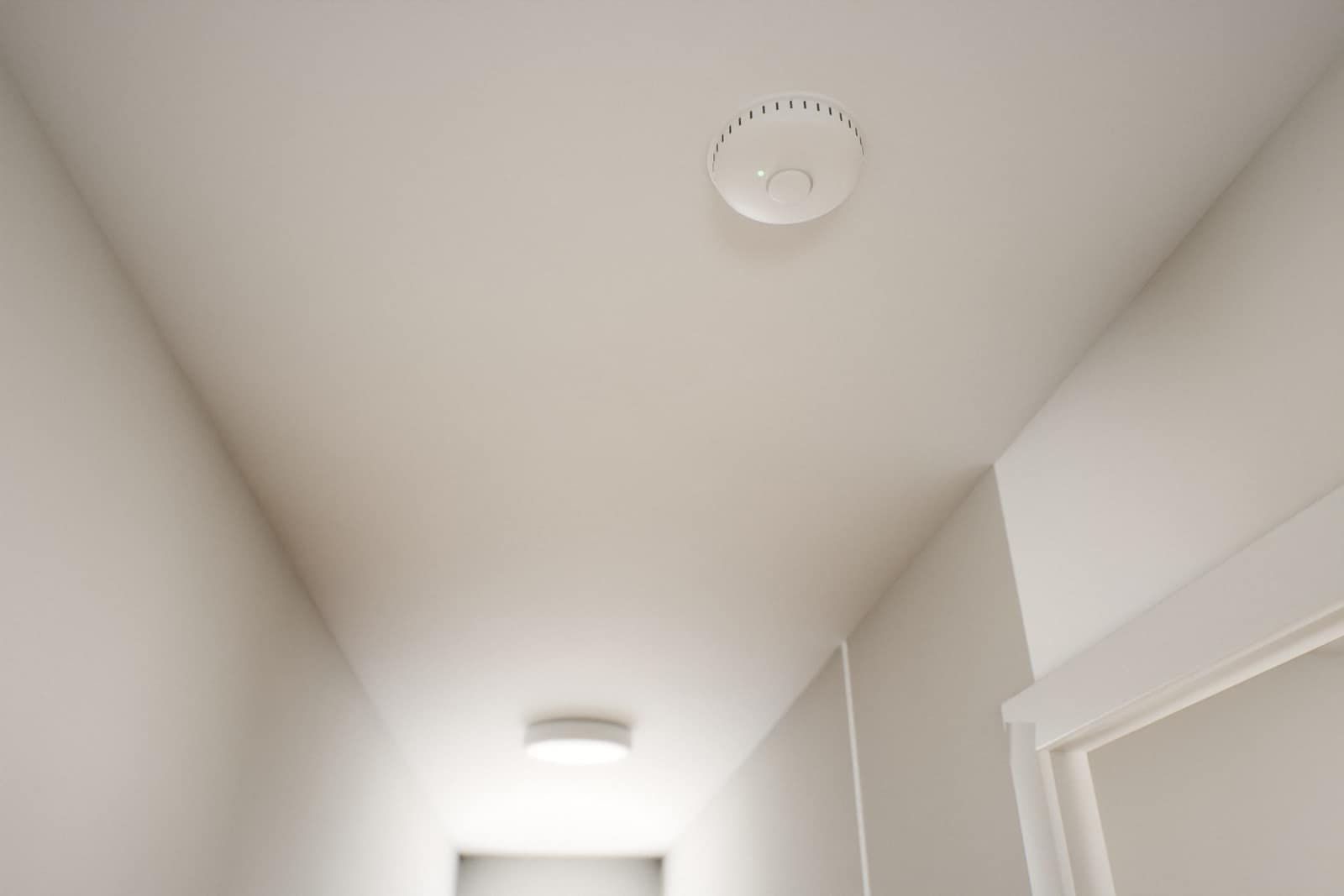
Oregon requires working smoke alarms in every home that is sold or rented. Those homes also need carbon monoxide (CO) alarms if they have a CO source, such as a gas furnace, a wood stove or an attached garage. Washington requires smoke alarms in every rental, every home built after 1980 and every home sold since July 1, 2019. It also requires CO alarms in rentals and at sale. In both states, remodeling work that needs a permit can trigger an upgrade to today's alarm rules.
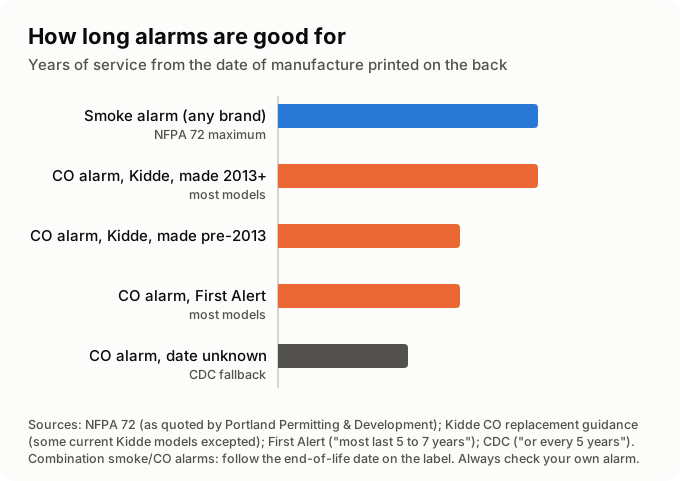
The rules also put an expiration date on the alarm itself. A smoke alarm comes out of service 10 years after the manufacture date printed on the back, and most CO alarms last 5 to 10 years. According to NFPA's 2024 report, working smoke alarms cut the risk of dying in a home fire by 60%. Yet a CPSC survey cited by NFPA found that a third of households never test theirs.
Below you'll find the requirements by situation for both states, where each alarm goes, how to read a chirp, and the rules for replacing hardwired alarms. We also list the free programs run by local fire departments. We're electricians, not lawyers. Where the law is unclear, we say so and link the source.
Smoke and CO alarm rules are triggered by events: a sale, a rental, a building permit, new construction. That is why two identical houses on the same street can have different legal requirements. Start with your situation.
| Situation | Smoke alarms | CO alarms | Who's responsible |
|---|---|---|---|
| You live in the home you own (outside Portland) | No statewide requirement found unless you sell, rent or do permitted work | Same: triggered by a sale, rental or permit | Owner |
| You live in the home you own (city of Portland) | City code 29.30.240: in each sleeping room, near the sleeping rooms and on every story, including basements | When a CO source is added or interior structural work is done (29.30.245) | Owner |
| Selling | Required (ORS 479.260), placed per the building code and fire marshal rules. Ionization alarms must have a hush button, and battery-only ionization alarms must come with a 10-year battery (ORS 479.297) | Required if the home has a CO source, covering all sleeping areas (ORS 105.838) | Seller. On CO, the buyer can sue for actual damages or $250 per unit, whichever is greater |
| Renting it out | Required (ORS 479.255), working before every new tenancy (ORS 479.270) | Required if the unit has, or connects to, a CO source (ORS 90.316) | Landlord installs and maintains; tenant tests and replaces dead batteries |
| Remodel that needs a permit | Alarms at new-construction locations; battery power is allowed. Under the current (2023) code, interconnection isn't required if wall and ceiling finishes aren't removed; the 2026 code would drop that exception | When a new CO source is added or a structural permit is issued | Owner or permit holder |
| New construction | Hardwired with battery backup and interconnected | Required in every new home | Builder |
Washington runs on a different logic: it keys smoke alarms to the year the home was built and whether it has been sold, and it exempts older owner-occupied homes from CO rules until they change hands.
Washington's smoke alarm law is RCW 43.44.110. It covers dwellings occupied by someone other than the owner, homes built after December 31, 1980, and any home sold on or after July 1, 2019. Homes built in Washington after 1980 must have alarms powered by the building wiring (WAC 212-10-025). CO alarms come from RCW 19.27.530 and the state residential code.
| Situation | Smoke alarms | CO alarms | Who's responsible |
|---|---|---|---|
| You live in the home you own | Required if built after 1980 (hardwired) or bought on or after July 1, 2019. An older home you've owned since before July 2019 has no statutory mandate unless you do permitted work | Exempt if it's a single-family home you occupied before July 26, 2009, until it is sold. Condos and newer homes aren't exempt | Owner |
| Selling | Seller provides at least one smoke alarm before the buyer moves in (RCW 43.44.110) | Required at sale (RCW 19.27.530) | Seller |
| Renting it out | Required. Owner makes sure it works at every vacancy and gives the tenant a signed written notice (RCW 59.18.060) | Required (RCW 19.27.530) | Owner installs; tenant maintains, including batteries |
| Remodel that needs a permit | Alarms at new-dwelling locations; battery power allowed. Exterior-only work and plumbing, electrical or mechanical work are exempt | Checked at inspection. Exterior work, electrical work, and plumbing or mechanical work that doesn't involve fuel-burning equipment are exempt | Owner or permit holder |
| New construction | Hardwired with battery backup, interconnected (listed wireless is allowed); a heat alarm in new garages | Outside each sleeping area and on every level | Builder |
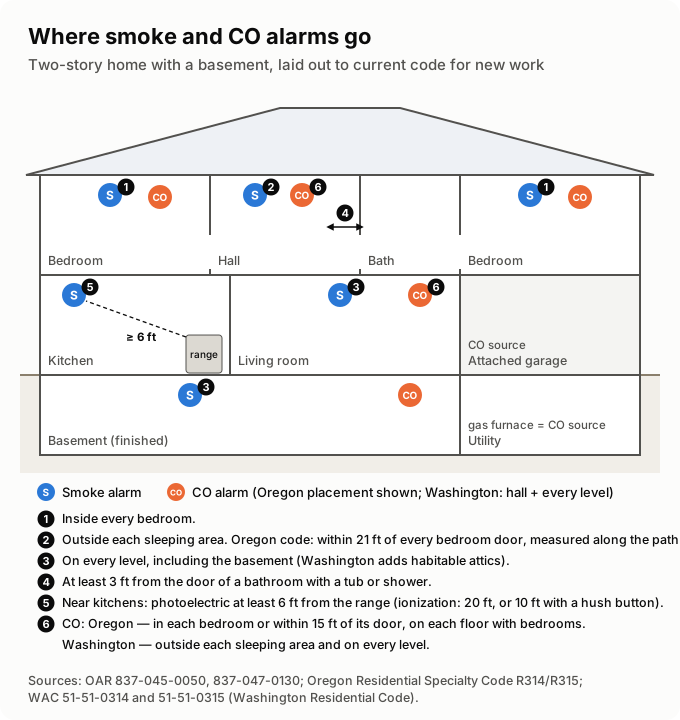
Placement rules are close in both states, with two differences that trip people up: how far the hallway alarm can be from the bedrooms, and where CO alarms go. For existing Oregon homes, the fire marshal's rule (OAR 837-045-0050) also says that when bedrooms are upstairs, the alarm goes as close as practical to the center of the ceiling directly over the stairway.
| Rule | Oregon | Washington |
|---|---|---|
| Inside every bedroom | Yes | Yes |
| Outside sleeping areas | Within 21 ft of every bedroom door, measured along the path of travel | In the immediate vicinity of the bedrooms |
| Every level | Yes, including basements (not crawl spaces or uninhabitable attics) | Yes, including basements and habitable attics |
| Bathrooms | At least 3 ft from the door of a bathroom with a tub or shower | Same |
| Near cooking appliances | Photoelectric at least 6 ft away; ionization 20 ft, or 10 ft with a hush button | Same distances (base code, IRC R314.3.1) |
| CO alarms | In each bedroom or within 15 ft outside its door; a separate alarm on each floor with bedrooms | Outside each sleeping area and on every level |
| Interconnection (new work) | Required; under the current code, not required in existing areas when finishes aren't opened up | Required; listed wireless alarms that all sound together are allowed |
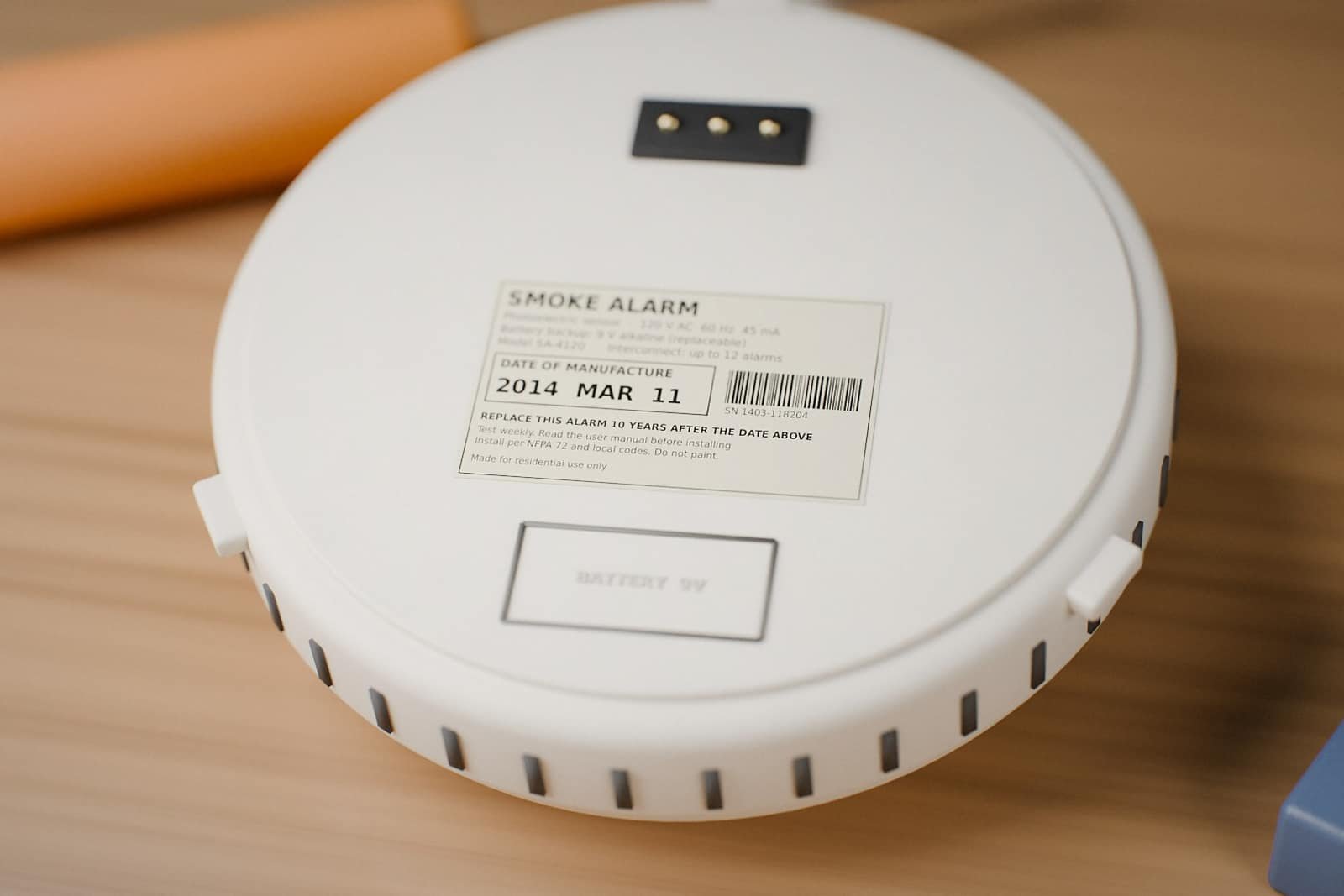
NFPA 72, the national alarm standard, says smoke alarms in one- and two-family homes shall not remain in service longer than 10 years from the date of manufacture. The Oregon State Fire Marshal repeats the same 10-year rule for homes being sold or rented. The date that counts is the one printed on the back of the alarm, not the day you installed it. An alarm that sat in a warehouse for two years has eight years left.
A working Test button doesn't prove an old alarm is still sensitive. Sensors degrade with age, which is exactly why the replacement date exists.
CO alarms have shorter and less uniform lives because the sensor itself wears out. Kidde rates CO alarms made in 2013 or later for 10 years (with a few model exceptions) and older ones for 7. First Alert says most of its CO alarms last 5 to 7 years. CDC's advice is to follow the manufacturer, or replace every 5 years if you don't know. Kidde notes that its CO alarms can't detect CO once they enter end-of-life mode.
Take one alarm down and look at the label. If it's older than 10 years, or has no date at all, assume the rest of the set is the same age. Replace them together. You'll see why that matters for hardwired systems below.
Twist the alarm off its base (hardwired alarms unplug from a short wiring harness). The label on the back shows a manufacture date, sometimes a "replace by" date, and the model number. Newer alarms may also chirp to tell you they've reached end of life. Take a photo of the label before you put it back: the model number is what an electrician needs to match a replacement.
Hardwired alarms run on house power with a battery backup, so a chirp doesn't always mean a dead battery. The pattern tells you what's wrong, and the patterns differ by brand. These are the signals from the manufacturers' own guides.
| Sound | Alarm | Meaning | What to do |
|---|---|---|---|
| 1 chirp every 60 seconds | Kidde hardwired smoke (20SA10) | Backup battery low (sealed, can't be replaced) | Check that the breaker is on; if the chirp continues, replace the alarm within 7 days |
| 2 chirps every 60 seconds | Kidde hardwired smoke (20SA10) | End of life | Replace the alarm |
| Quick beep every 30 seconds, red light flashing | Kidde CO alarm | End of life; no longer detects CO | Replace now; a new battery won't stop it |
| 1 beep every minute | First Alert CO alarm | Low battery | Replace the battery |
| 5 beeps every minute | First Alert CO alarm | End of life | Replace the alarm |
| 4 beeps and a pause, repeating | First Alert CO alarm | Emergency: CO detected | Get everyone outside and call 911 |
Hardwired stays hardwired. The Oregon State Fire Marshal says that if hardwired alarms were installed when the home was built, they must be replaced with hardwired alarms. In Washington, homes built after 1980 must have alarms powered by the house wiring (WAC 212-10-025). In either state, swapping a hardwired alarm for a battery unit and capping the wires is not a legal fix.
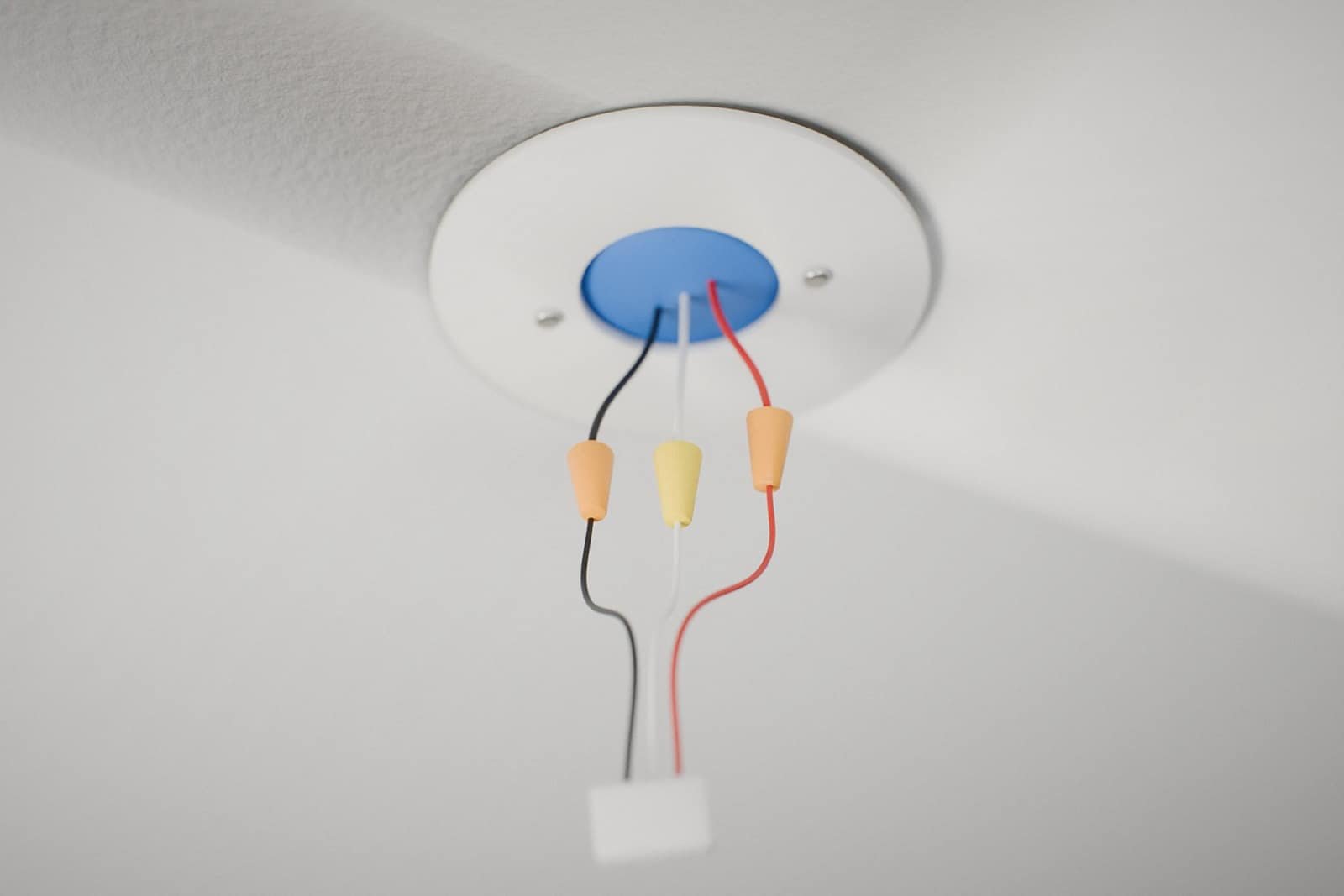
Brands don't mix. Interconnected alarms talk to each other over a third wire. Kidde says its alarms are listed only with the compatible models named in each user guide. Mixing makers creates a system that hasn't been tested as a whole, and it can cause nuisance alarms or failure to alarm. Adapter plugs exist, such as Kidde's KA-B3 and First Alert's ADK-12, but they are model-specific. In practice, the clean answer is to replace the whole interconnected set with one compatible family. That also resets every alarm's 10-year clock at once.
Know the limits. Kidde's installation guide cites the NFPA interconnect limit: no more than 12 smoke alarms, and no more than 18 alarms in total, on one interconnected system. Standard wiring is black (hot), white (neutral) and red (interconnect), but harness colors vary by maker. Manufacturers recommend a qualified electrician for the wiring. Always turn off the breaker first, and don't assume a harness is dead because the alarm came off.
| Situation | Oregon | Washington |
|---|---|---|
| Like-for-like swap by an electrical contractor | Yes: an electrical permit, or a minor label (smoke detectors are on the minor-label list, OAR 918-309-0220) | Single-family home: no permit. Like-in-kind replacement of line-voltage smoke or CO alarms is Class A basic work (WAC 296-46B-901). Inside Vancouver city limits, the city runs its own electrical permits, so check with the city |
| Homeowner swapping alarms in their own home | Unclear: ORS 479.540 exempts maintenance on your own home, but OAR 837-045-0060 says owners must get a permit to install a 110-volt alarm. Ask your building department | Same Class A rule for like-in-kind swaps in single-family homes |
| New hardwired alarms where none existed (new wiring) | Permit required (or minor label within its scope) | Electrical permit from L&I, or from the City of Vancouver inside city limits |
When we replace alarms in Oregon, the permit or minor label is part of the job and shows on the quote. In older homes with no hardwired alarms at all, fishing new cable to every bedroom can mean opening ceilings. Sealed 10-year battery alarms with listed wireless interconnect are often the practical choice there: in Oregon, alterations may use battery power, and under the current (2023) code interconnection isn't required where finishes aren't removed. The 2026 code expected October 1 would remove that exception. For a sale, a rental or new construction, check the requirement first.
Our starting prices for Portland and Vancouver are below. You get a written quote before any work starts; it names the alarm models and includes any permit the job needs.
| Job | Starting price | Notes |
|---|---|---|
| Home electrical safety check (includes smoke alarms) | Free | About 45 minutes, written findings, nothing opened up. One per address |
| Replace a battery or plug-in smoke or CO alarm | from $70 per alarm | Sealed 10-year battery units recommended |
| Replace a hardwired smoke or combination smoke/CO alarm | from $150 per alarm | Whole interconnected set matched to one compatible brand |
| Track down nuisance alarms or a fault on the alarm circuit | $250 diagnostic | Comes off the bill if you go ahead with the repair |
| Add hardwired, interconnected alarms where none exist | Quoted in writing | Depends on attic access, number of rooms and the permit |
Smoke alarms sold in the U.S. are listed to UL 217. The 8th edition applies to alarms tested from June 30, 2024. It added two fire tests using burning and smoldering polyurethane foam, the material in most modern furniture, and a cooking nuisance test. That last one matters because nuisance alarms from cooking are one of the most common reasons people disconnect alarms. Alarms listed to the new edition are designed to be less prone to cooking false alarms.
The new standard does not require you to replace alarms that are already installed. We found no Oregon or Washington rule that does either. But if your alarms are near the end of their 10 years anyway, their replacements will be built to the newer test. Check that the package says it meets the current UL 217, often described as resistant to cooking nuisance alarms.
On sensor type, the U.S. Fire Administration recommends having both ionization and photoelectric alarms, or dual-sensor alarms, and choosing interconnected alarms. Near kitchens, photoelectric alarms are the better fit, and Oregon's code lets them sit closer to the range (6 feet, versus 20 for ionization). In Oregon, ionization alarms must have a hush button, and battery-only ionization alarms must come with a 10-year battery (ORS 479.297).
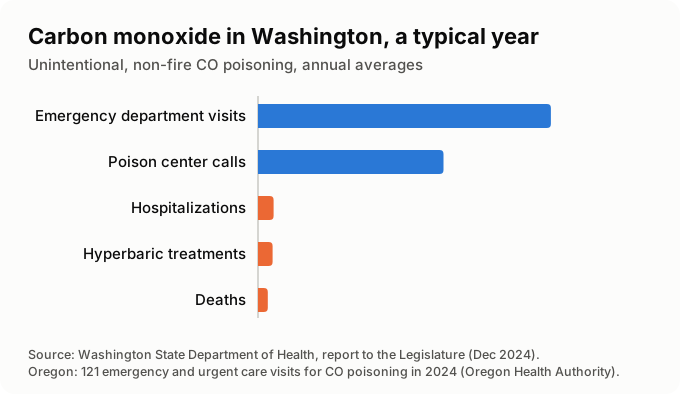
Carbon monoxide has no smell and no color, and early symptoms feel like the flu: headache, dizziness, nausea, fatigue. According to the CDC, unintentional CO poisoning not linked to fires kills more than 400 Americans a year and sends more than 100,000 to the emergency department. In Washington, the Department of Health counts more than 10 deaths a year. In Oregon, the Health Authority reported 121 emergency and urgent care visits for CO poisoning in 2024.
The usual sources in our area are gas furnaces and water heaters, fireplaces and wood stoves, cars idling in an attached garage, and generators run too close to the house during outages. If you're adding backup power, our generator vs. battery backup guide covers placement.
A CO alarm is designed to sound before levels become dangerous for a healthy adult, not at the first trace. UL 2034, the CO alarm standard, sets time windows that get shorter as the concentration rises.
| CO level in the air | Alarm must sound within |
|---|---|
| 30 ppm, constant | Should not alarm, even after 30 days |
| 70 ppm | 60–240 minutes |
| 150 ppm | 10–50 minutes |
| 400 ppm | 4–15 minutes |
Whatever the level, a CO alarm in its emergency pattern means the same thing: don't hunt for the cause. Get everyone outside, including pets, and call 911 from outside. Don't go back in until the fire department says it's clear.
Both states split the work between the owner and the tenant, but they split it differently.
| Duty | Oregon | Washington |
|---|---|---|
| Install alarms | Landlord (ORS 479.270); CO alarms where there's a CO source (ORS 90.316) | Owner (RCW 43.44.110); CO alarms required (RCW 19.27.530) |
| Check before a tenant moves in | Landlord, before every new tenancy | Owner makes sure alarms work at every vacancy |
| Paperwork | Written testing instructions when the tenant moves in | Written notice about the alarms, signed by landlord and tenant (RCW 59.18.060) |
| Testing | Tenant, at least every 6 months (ORS 90.325) | Tenant maintains per the manufacturer (RCW 59.18.130) |
| Batteries | Landlord supplies working batteries at move-in; tenant replaces dead ones | Tenant |
| Repairs | Landlord, after written notice. If not fixed in 10 days, the tenant can go to the fire marshal (ORS 479.280) | Owner keeps the unit in code compliance (RCW 59.18.060) |
| Disabling alarms | Prohibited for smoke and CO alarms, including pulling working batteries | Tenants who fail to maintain alarms can be fined |
| Penalty | Civil penalty up to $250 | Up to $200; $5,000 for an owner if a fire then harms a tenant |
Alarm requirements at sale are cheap to satisfy and awkward to fix in the middle of escrow. Walk the house with this list before the listing photos.
In Washington, alarm repairs made only because of the sale don't require adding interconnection where there was none. In Oregon, a buyer who closes without the required CO alarms can sue for actual damages or $250 per unit, whichever is greater, within a year.
Local fire agencies and the Red Cross will help with battery alarms, especially for seniors, people with disabilities and families who can't afford them. Don't count on them for hardwired alarms: Vancouver Fire says it cannot assist with hard-wired alarms, and Portland Fire & Rescue says hardwired alarms must be installed by a qualified electrician.
| Program | Area | What they offer | Contact |
|---|---|---|---|
| Portland Fire & Rescue Smoke Alarm Hotline | City of Portland | Smoke alarm help and free Home Fire Safety Assessments | (503) 823-3752, voicemail answered within 3 business days |
| Vancouver Fire Department | Inside Vancouver city limits | Limited supply of battery smoke alarms installed free for residents in need; bed-shaker alarms for residents who are hard of hearing | (360) 487-7260 |
| Clark County Fire District 6 | Fire District 6 area (Hazel Dell, Felida, Salmon Creek) | Free alarm checks and battery replacement; limited free battery alarms | (360) 576-1195 |
| Clark-Cowlitz Fire Rescue | Ridgefield, La Center and nearby areas | Installs alarms in owner-occupied homes for seniors, disabled residents or those on fixed incomes; will install alarms you've bought | (360) 887-1684 |
| American Red Cross, Cascades Region | Oregon and Southwest Washington | Free smoke alarm installation through the Home Fire Campaign | Request online at redcross.org |
Oregon expects to adopt the 2026 Oregon Residential Specialty Code, based on the 2024 International Residential Code, around October 1, 2026. The proposed changes renumber the alarm sections and would remove Oregon's exception that skips interconnection in existing areas when finishes aren't removed. They would also add smoke alarms for sleeping lofts. Washington's 2024 codes take effect May 3, 2027.
Code updates mostly affect new construction and permitted work. They don't reach back into a home nobody is working on. If you're planning a remodel, an ADU or a basement bedroom, ask which code edition your permit falls under.
Battery alarms are an easy DIY job. Call us for these:
Fire Prevention Week runs October 4–10, 2026. It's a good week to press the Test button on every alarm and read the dates on the back. And if you run space heaters in winter, read our guide on why a space heater trips the breaker: the fatal Portland fire in January involved both a heater on an extension cord and no working alarms. For alarm replacements and new wiring, see our residential electrical services or book the free safety check.
Answers
Related services
A no-charge visual check of your home's electrical system — panel, grounding, outlets, GFCI and AFCI protection, smoke alarms and visible wiring. Roughly 45 minutes, written findings, no obligation.
View serviceFull-service residential electrical work for Portland and Vancouver homeowners — panel upgrades, rewiring, lighting, and everyday repairs done safely and to code.
View serviceDiagnose and fix electrical problems other electricians couldn't pin down — flickering lights, dead outlets, mystery trips, and everything in between.
View serviceKeep reading
A 1,500-watt space heater pulls 12.5 amps, which leaves a standard 15-amp bedroom circuit no room for anything else. Here is why the breaker trips, why the trip is not the real danger, and what the fixes cost in Portland and Vancouver.
Read articleIn each of the last three winters, hundreds of thousands of Portland-metro and Clark County homes lost power, some for the better part of a week. Here is what a standby generator, a portable with a transfer switch, and a home battery actually cost to install and run in 2026, how long each one keeps the heat on, and what the permits look like in Portland, Vancouver and Clark County.
Read articleThe 30% federal credit is gone for any system finished after December 31, 2025. That changes the math, but not the same way on both sides of the river. Here is what a Portland (PGE) and a Vancouver (Clark PUD) homeowner actually gets in 2026, how much a roof here really produces, and what your electrical panel needs before a single module goes up.
Read articleAlarms old, chirping or missing?
Book a free home electrical safety check: we look at your smoke alarms along with the panel and GFCI/AFCI protection, and you get written findings. If alarms need replacing, you get a written quote first. Hardwired alarms start at $150 each, battery smoke/CO alarms at $70. Portland and Vancouver metro.