Electrical Troubleshooting
Diagnose and fix electrical problems other electricians couldn't pin down — flickering lights, dead outlets, mystery trips, and everything in between.
View service
Safety · September 21, 2026
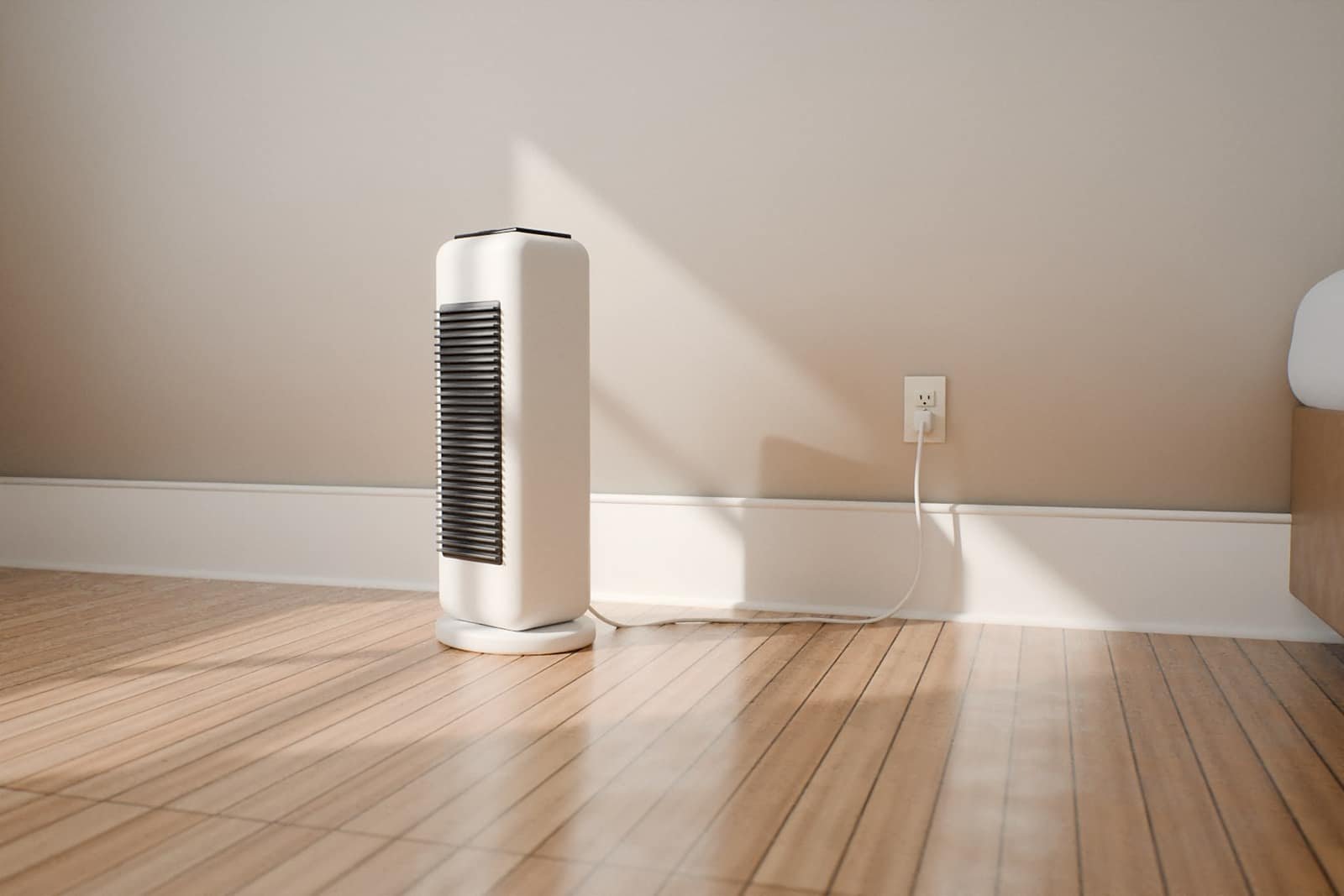
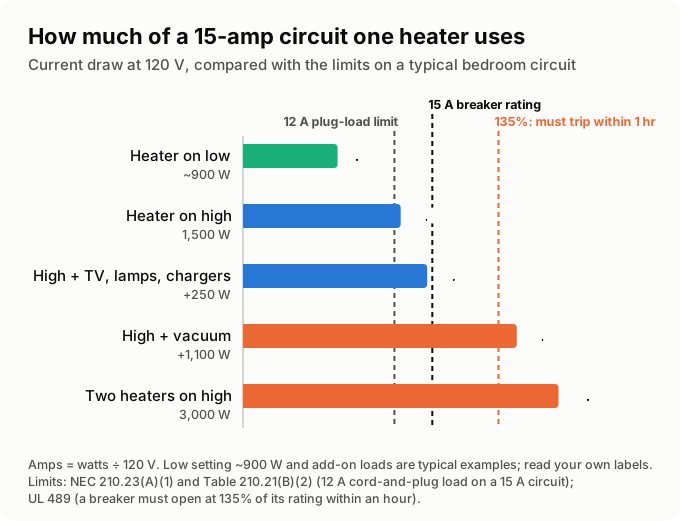
If your space heater keeps tripping the breaker, the breaker is almost always doing its job. A standard 1,500-watt heater on its high setting draws 12.5 amps. Most bedrooms and living rooms in Portland and Vancouver homes are on 15-amp circuits, and the electrical code sizes plug-in appliance loads on that circuit at 12 amps. One heater uses up all the margin before you turn on a lamp, a TV or a vacuum.
The trip itself is not the danger. The danger is what never trips: a worn outlet that heats up around the plug, a loose connection inside the wall, or an extension cord running at its limit for eight hours under a bed. On January 12, 2026, a woman died in a house fire in Portland's Piedmont neighborhood. Investigators traced it to a space heater powered by an extension cord, and no smoke alarms were sounding when crews arrived.
This guide explains what the trip is telling you, how to tell a harmless overload from a warning sign, what to do tonight, and what the real fixes cost if one room simply needs more power. It is written for the housing we actually work in: pre-war Portland bungalows with two outlets per room, and 1960s and 1970s Vancouver ranches.
Every heater label lists watts. To get amps, divide by the voltage, which is 120 in a U.S. home: 1,500 W ÷ 120 V = 12.5 A. Almost every plug-in space heater sold in the U.S. tops out at 1,500 watts, which is exactly why they all trip breakers in the same rooms.
Now compare that with the circuit. Bedroom and living-room outlets in most homes are wired with 14-gauge copper on a 15-amp breaker. The National Electrical Code sets two limits that matter here. Section 210.23(A)(1) caps a cord-and-plug appliance at 80% of the circuit rating, and Table 210.21(B)(2) sets the maximum load on a 15-amp receptacle at 12 amps. Listed 1,500-watt heaters are sold for ordinary 15-amp outlets, but one on high leaves no margin under that 12-amp sizing rule, and it runs for hours, not minutes.
A breaker does not trip the instant it passes its number, and that is by design. Circuit breakers built to UL 489 must carry 100% of their rating indefinitely and must open at 135% of their rating within an hour. On a 15-amp circuit, that means a load of about 20 amps can run for many minutes before the breaker trips. That delay is why a heater that works fine at 7 p.m. trips at 7:25, when someone starts the vacuum down the hall.
| What's running | Watts | Amps | On a 15-amp circuit |
|---|---|---|---|
| Space heater on low | about 600–900 W | 5.0–7.5 A | Fits, with room for a lamp and a TV |
| Space heater on high | 1,500 W | 12.5 A | Past the 12 A sizing figure on its own; no margin left |
| Heater on high + TV, lamps, chargers | about 1,750 W | about 14.6 A | Just under the breaker rating, with no margin left |
| Heater on high + vacuum | about 2,600 W | about 21.7 A | Over 135%; the breaker must trip, often within minutes |
| Two heaters on high | 3,000 W | 25 A | Trips quickly; never run two on one circuit |
| Heater + hair dryer (bathroom) | 3,000 W or more | 25 A or more | Trips quickly |
When we diagnose a heater-related trip, it almost always comes down to one of these five causes. The first two are simple overloads. The last three are warnings.
| When it trips | What it usually means | What to do |
|---|---|---|
| Instantly, the moment the heater turns on | Short circuit or ground fault in the heater, cord or outlet | Stop using that heater and that outlet. Call an electrician if the outlet is involved. |
| After 10–60 minutes on high | Overload: heater plus other loads on the circuit | Map the circuit (below), move the heater or drop other loads |
| Only when a specific appliance starts | Two big loads on one circuit | Never run them together; consider a dedicated circuit |
| AFCI breaker trips (Test button) | Arcing detected in a cord, plug, outlet or wiring | Check the heater cord and plug; if it repeats, have the circuit tested |
| Breaker won't reset, or trips with nothing plugged in | Fault in the wiring or a failed breaker | Leave it off and call. This is not a heater problem anymore. |
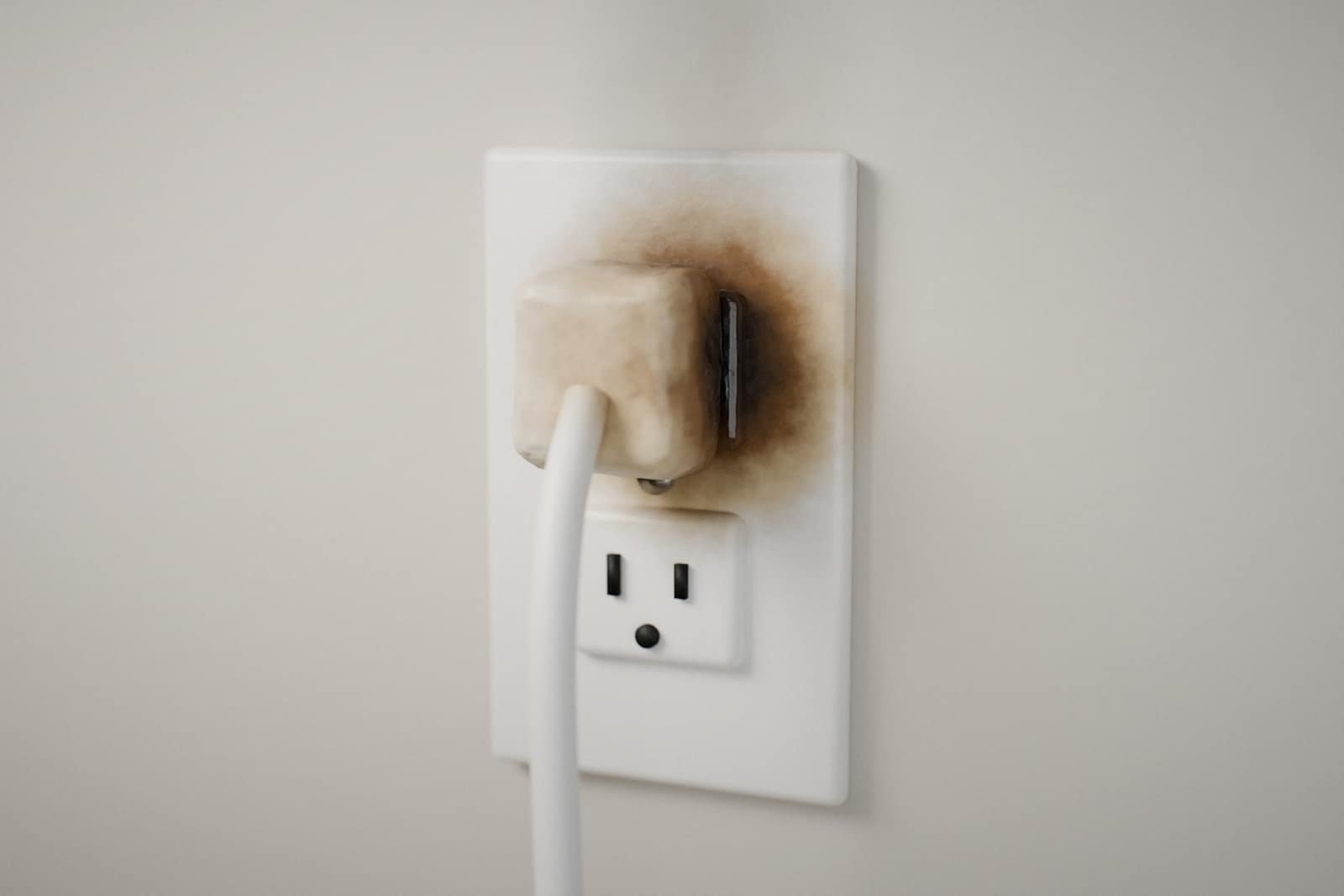
A breaker measures current. It has no idea that the outlet behind your dresser is running hot. A worn receptacle with weak contacts, a loose screw terminal or a cheap plug can reach dangerous temperatures while the current stays at a normal 12.5 amps, so the breaker never reacts. Many electrical fires start at a connection like this, not in the wire.
Research backs this up. A 2014 lab study funded by the National Institute of Justice found that very loose receptacle connections overheated significantly at loads of 9 amps or more. A space heater is exactly that kind of load. In an earlier study of 254 receptacles taken from homes, only 55 passed a 15-amp heating test as found; many needed cleaning or tightening to pass. And CPSC engineering work has found that plugs with poor internal crimps run hotter than good ones under heater loads.
Heat builds slowly and quietly. A plug that is warm after 20 minutes may be scorching after six hours. Our rule is simple: if a cord, outlet or breaker feels hot, stop using it.
Every fire authority that serves our area says the same thing, in almost the same words. Portland Fire & Rescue: plug large appliances, including space heaters, directly into a grounded wall outlet and never into a power strip or extension cord. The Washington State Fire Marshal's Office, January 2026: plug space heaters directly into a wall outlet and never use extension cords or power strips. The U.S. Consumer Product Safety Commission gives the same advice.
The reason is physics, not caution. A typical household extension cord is 16-gauge wire rated for 13 amps at best. A 1,500-watt heater runs it close to its limit for hours, often coiled or under a rug where it can't shed heat. Every cord adds two more connections, at the wall and at the cord's own socket, and each one is a place where heat builds. Power strips and surge protectors are not built for continuous heater loads at all, and heater makers say so in their manuals. Cords and outlets are not a rare cause, either: in U.S. Fire Administration data for 2014–2016, outlets and receptacles were the equipment involved in 12% of home electrical fires, and extension cords in 5%.
Most people reach for a cord because the only outlet is on the wrong wall. That is a wiring problem with a wiring fix, and it usually costs less than people expect. See fixes and costs below.
| Connection | What it's rated for | Verdict for a 1,500 W heater |
|---|---|---|
| Wall outlet in good condition, nothing else big on the circuit | 15 A receptacle, 12 A cord-and-plug load | Yes, and check the plug for heat after the first half hour |
| Worn outlet with a loose grip | Contacts no longer hold the plug firmly | No. Replace the outlet first. |
| Light-duty extension cord (16 AWG) | 13 A maximum, less for long cords | No |
| "Heavy-duty" extension cord | Higher wire rating, but still extra connections | No. Fire marshals say never, with no heavy-duty exception. |
| Power strip or surge protector | Not designed for continuous heater loads | No |
| Outlet splitter or cube tap | Adds a connection at the most stressed point | No |
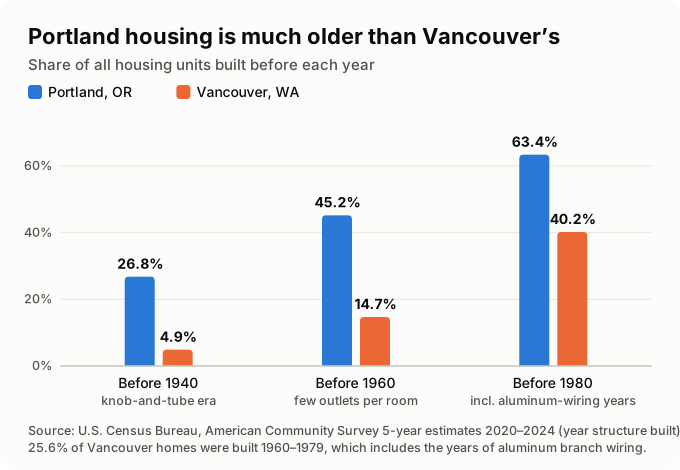
Housing age explains a lot of the heater calls we get. According to the Census Bureau's 2020–2024 American Community Survey, 26.8% of Portland's homes were built before 1940 and 45.2% before 1960. In Vancouver those shares are 4.9% and 14.7%. After the Piedmont fire, Portland Fire & Rescue spokesperson Rick Graves pointed out that in "homes that were constructed 100 years ago, there are not a lot of wall outlets." Houses from that era were wired for a few lamps and a radio, often with one or two outlets per room and several rooms on one circuit. Add a 1,500-watt heater to a circuit like that and you get tripped breakers, extension cords run across the floor, and overheated connections.
Pre-1940 homes can still have knob-and-tube wiring somewhere in the walls or attic. It was never designed for heater loads, and insulation packed around it keeps the wires from shedding heat. Vancouver has its own version of the problem: 40.2% of its homes were built before 1980, including 25.6% built between 1960 and 1979, which includes the years when some homes were wired with aluminum branch circuits. The CPSC found that homes wired with aluminum before 1972 were 55 times more likely to have a connection reach fire-hazard conditions than homes wired with copper. A heater running for hours on an aluminum connection is exactly the load that finds a weak splice. Our knob-and-tube and aluminum wiring guide explains how to tell what you have.
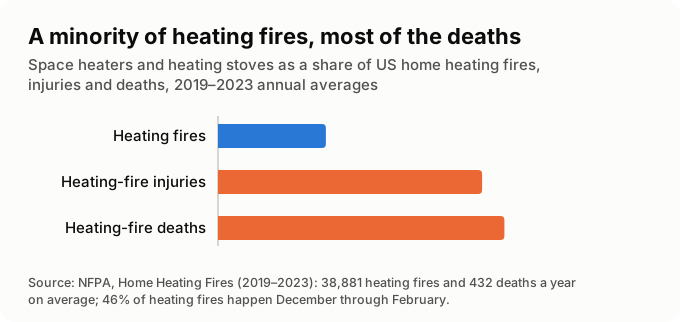
Heating is the second leading cause of home fires in Oregon every year, according to the Oregon State Fire Marshal. Nationally, NFPA counts an average of 38,881 home heating fires and 432 deaths a year from 2019 to 2023. Space heaters and heating stoves account for only 29% of those fires but 77% of the deaths and 71% of the injuries. Almost half of all heating fires (46%) happen from December through February.
The U.S. Fire Administration looked specifically at portable heaters in homes. They caused only about 3% of residential heating fires, but 41% of the heating fires that killed someone. The leading cause, at 48%, was a heater too close to something that could burn: bedding, curtains, clothes or furniture. Portable heater fires peak in January.
Locally, Portland Fire & Rescue responded to at least three heater-caused fires in eight days during the January 2026 cold snap. The Washington State Fire Marshal reports that heating equipment fires killed at least four people in Washington in 2024.
None of this means you should stop using a space heater. It means using one like the high-wattage appliance it is.
Before you pay anyone, spend 15 minutes finding out what else shares the heater's circuit. Most homeowners are surprised by the answer.
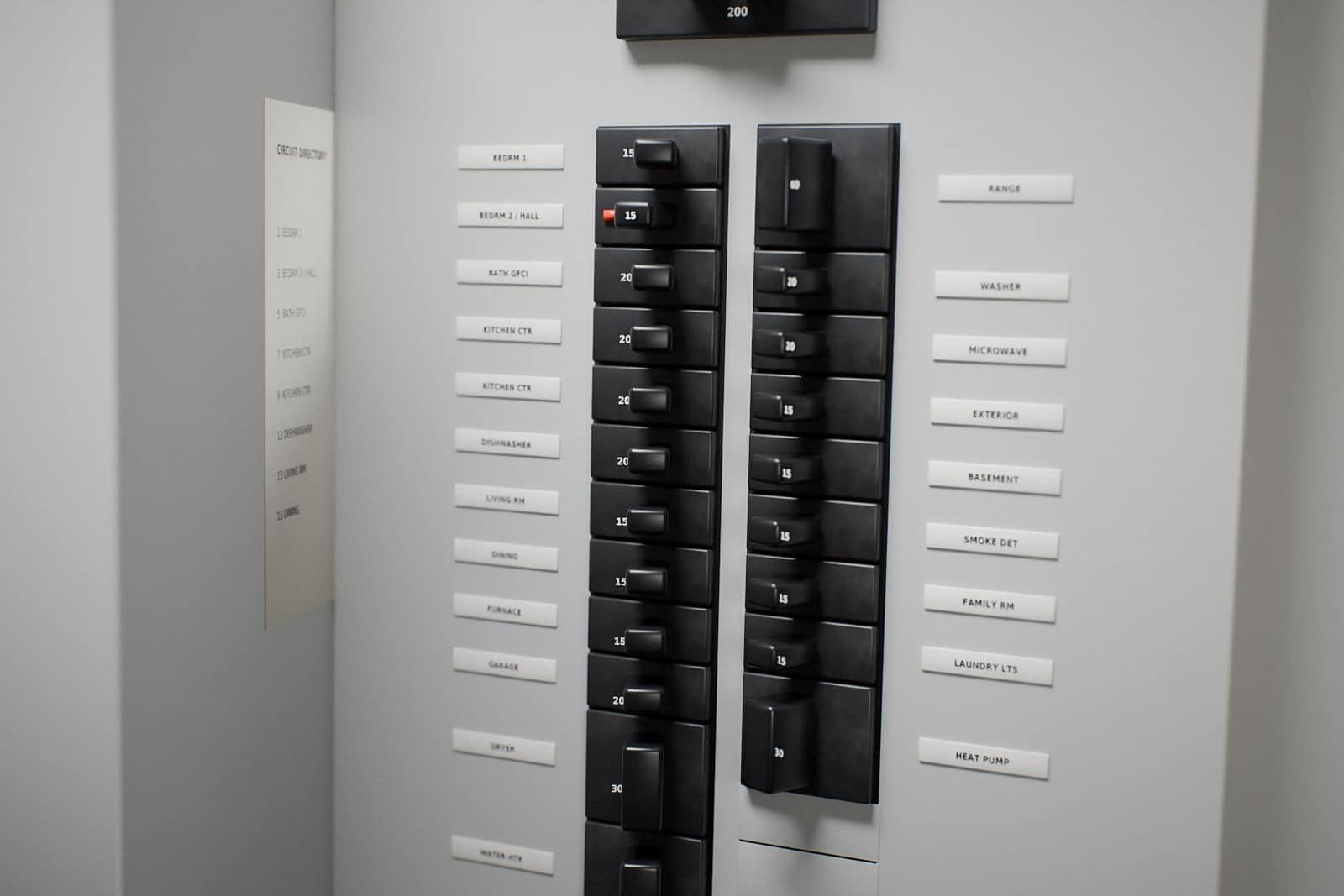
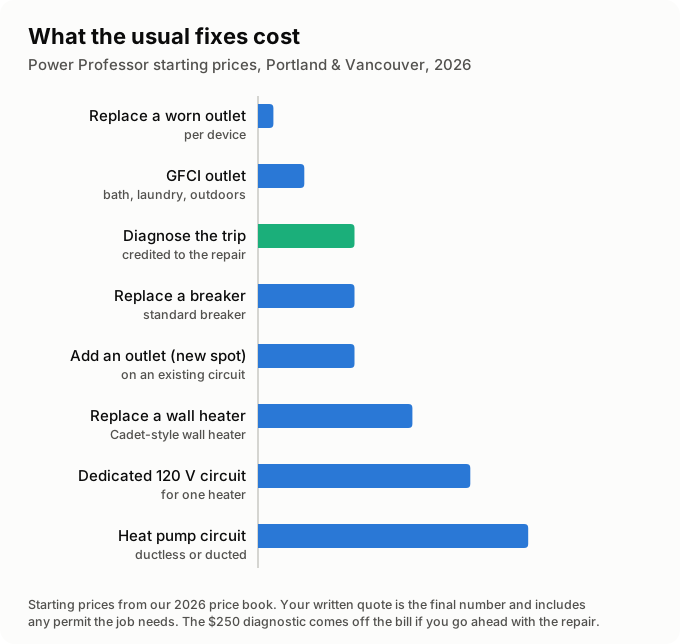
Once you know why the breaker trips, the fix is usually small. These are our starting prices for Portland and Vancouver. Every job gets a written quote before work starts, and the quote includes any permit the work needs.
For a room you heat every night, the best fix is a dedicated 120-volt circuit to an outlet placed where the heater actually sits. It takes the heater off the shared bedroom circuit, ends the extension-cord problem, and gives you a modern tamper-resistant outlet on its own breaker. If the panel is full or the wiring is too old to extend, that comes out at the estimate, before any work starts.
| Problem | Fix | Starting price |
|---|---|---|
| Breaker trips and you don't know why | Diagnostic visit: find the cause and test the circuit | $250, credited to the repair if you go ahead |
| Plug is loose or the outlet is worn or scorched | Replace the receptacle and check the connections behind it | from $40 per device |
| Heater used in a bathroom, laundry or other damp area | GFCI outlet | from $120 |
| Breaker is worn, warm or trips below its rating | Replace the breaker | from $250 |
| The only outlet is on the wrong wall | Add an outlet in a new location on an existing circuit | from $250 |
| Room needs a heater every night | Dedicated 120 V circuit and outlet | from $550 |
| Old or recalled wall heater | Replace a Cadet-style wall heater | from $400 |
| You want real heat instead | Circuit for a heat pump (ductless or ducted) | from $700 |
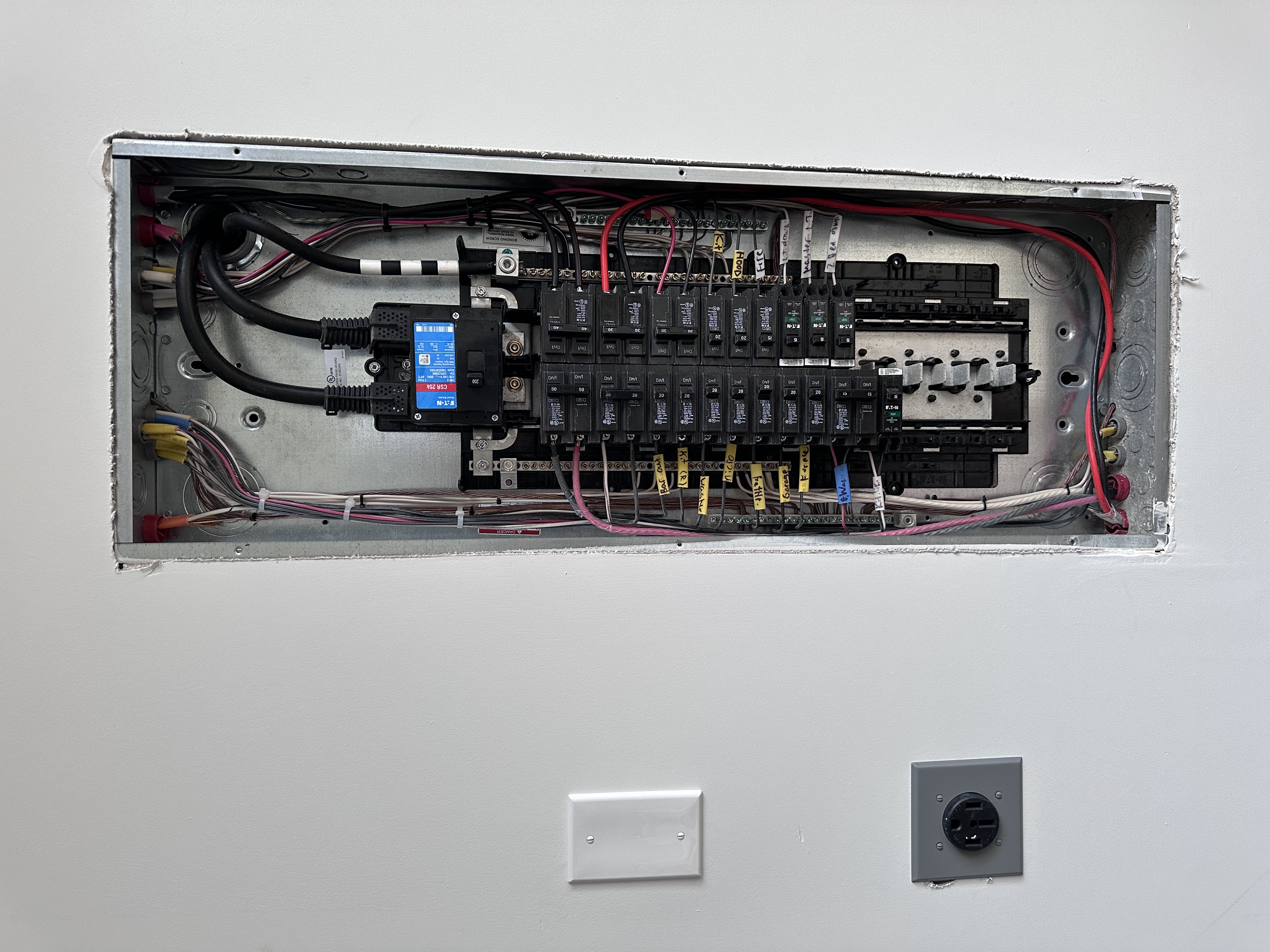
Bigger jobs sometimes turn up behind a heater problem: a panel with no open spaces, a breaker brand known for failing to trip, or knob-and-tube in the attic. If that's what we find, you hear about it before anything is quoted, and you decide. See our residential electrical services and panel changes and upgrades for what those projects involve.
We see these every winter. Each one makes the tripping stop by removing the protection.
A space heater running every evening is usually a sign that a room is underheated: a converted porch, a basement bedroom, a room at the end of a long duct run. A dedicated circuit makes the heater safe. A permanent heat source fixes the room.
For many homes that means a ductless heat pump. Utility programs on both sides of the river still pay toward one, even though the federal 25C tax credit ended with 2025. Most of the money goes to homes heated mainly by electric baseboard, wall heaters or an electric furnace, so a gas-heated house with one cold room may not qualify. Check the current terms before you buy.
| Program | Who | What it offers |
|---|---|---|
| Energy Trust of Oregon | Oregon homes | Ductless heat pump incentive: $800, or $1,800 income-qualified. PGE and Pacific Power customers whose main heat is electric resistance (baseboard, wall heaters or furnace) |
| Clark Public Utilities | Clark County, WA | Ductless heat pump rebate: $900 for property owners whose home is heated mainly by electric furnace, baseboard, ceiling-cable or wall heaters; separate ducted rebates |
| PCEF Energy Friendly Homes (Portland) | Owner-occupied Portland homes, income up to 150% of area median | Can cover heat pumps, plus panel upgrades when switching from gas |
Heat pump circuits are routine work for us, and we coordinate with your HVAC installer. The same visit is a good time to confirm your panel has room. Our rebates guide lists what utilities currently pay for electrical upgrades.
Call right away, and leave the heater off, if you notice any of the following. If there is smoke or flame, get everyone out and call 911 first.
We cover Portland, Gresham, Beaverton, Vancouver, Camas and the rest of the metro. See emergency electrical service for after-hours problems, or book a troubleshooting visit for the rest.
Answers
Related services
Diagnose and fix electrical problems other electricians couldn't pin down — flickering lights, dead outlets, mystery trips, and everything in between.
View serviceFull-service residential electrical work for Portland and Vancouver homeowners — panel upgrades, rewiring, lighting, and everyday repairs done safely and to code.
View serviceElectrical panel upgrades and replacements for Portland and Vancouver, WA homes — 100A to 200A service upgrades, Federal Pacific and Zinsco swaps, permit and inspection included, priced in writing before we start.
View serviceKeep reading
Oregon and Washington have different smoke and carbon monoxide alarm rules for owners, sellers, landlords and remodels. Here is what each state requires, where alarms go, when they expire, why hardwired alarms chirp, and what replacement costs.
Read articleIn each of the last three winters, hundreds of thousands of Portland-metro and Clark County homes lost power, some for the better part of a week. Here is what a standby generator, a portable with a transfer switch, and a home battery actually cost to install and run in 2026, how long each one keeps the heat on, and what the permits look like in Portland, Vancouver and Clark County.
Read articleThe 30% federal credit is gone for any system finished after December 31, 2025. That changes the math, but not the same way on both sides of the river. Here is what a Portland (PGE) and a Vancouver (Clark PUD) homeowner actually gets in 2026, how much a roof here really produces, and what your electrical panel needs before a single module goes up.
Read articleBreaker keeps tripping?
A $250 diagnostic visit finds the cause and tests the circuit. The $250 comes off the bill if you go ahead with the repair. Installs carry our 5-year labor warranty. Portland and Vancouver metro.